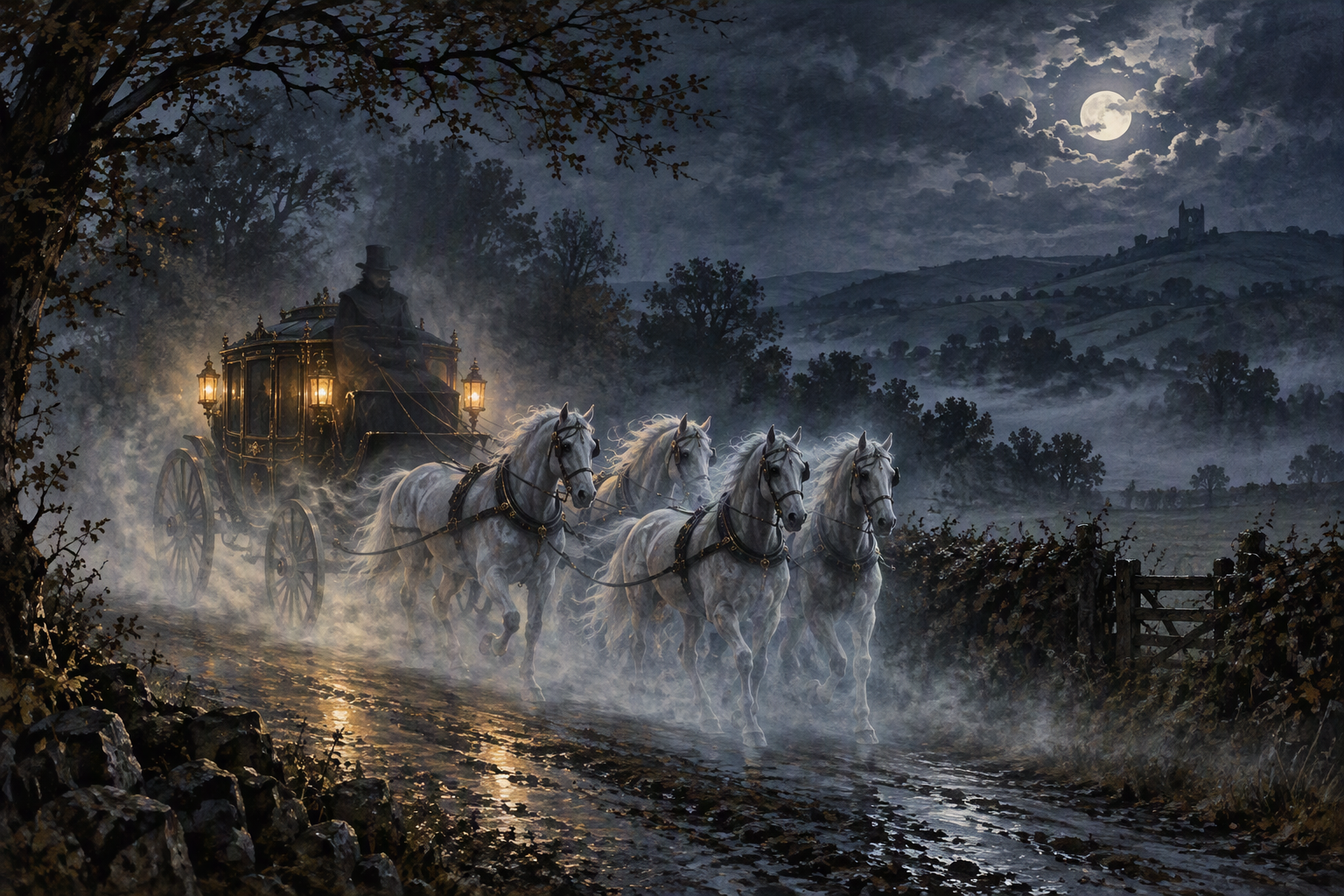
The Phantom Coach: Ghostly Carriages, Spectral Horses & Unearthly Journeys of Somerset

Penni Wallace • October 31, 2026

There is something particularly unsettling about hearing a horse and carriage when there should be none.


Long after the coaching days of Somerset had disappeared, stories have continued to circulate of coaches heard rattling through the darkness, horses galloping along roads where no horses are present, riders who vanish before the eyes of witnesses, and carriages that appear from nowhere before disappearing just as mysteriously.


Some are associated with accidents or tragic deaths. Others seem to have no obvious explanation at all.


And while Somerset has no shortage of ghost stories, the tales of its **phantom journeys** are particularly fascinating.

They seem to belong to different eras — from the days of horse-drawn coaches and highwaymen to steam trains and even phantom motor vehicles.


This is a collection of some of Somerset's ghostly coaches, horses, riders and other unexplained forms of transport.


As always with folklore, these are stories and reported experiences rather than established supernatural facts.

Some have been passed down locally for generations; others are comparatively modern reports.


The Phantom Coaches of Somerset


Brockley Combe — the Swerving Coach


Perhaps one of Somerset's best-known phantom coach stories comes from Brockley Combe, near Backwell.


The wooded combe has a long-standing reputation for strange happenings, including a ghostly coach and four.


One version describes a hearse-like carriage drawn by four horses and driven by a headless coachman.

Other accounts say that the coach appears suddenly from the darkness and seems to charge towards approaching traffic, sometimes being blamed for accidents.


Another version places its appearance at midnight on Christmas Eve, when an eighteenth-century coachman is said to drive the vehicle silently through the darkness, cracking a whip which makes no sound.


There are also separate stories of a headless huntsman and a phantom horseman in the same area, suggesting that Brockley Combe has accumulated several layers of ghostly folklore over the years.


The stories are not documented in the sense of a contemporary historical record, but the phantom coach is a long-running local tradition, with reports continuing into the twentieth century.


It is easy to imagine how such a story might have developed in a dark, wooded combe once travelled by horse and carriage — a place where the sound of hooves could carry a surprisingly long way through the trees.


Bossington — the Headless Coachman


Another Somerset story concerns the roads around Bossington.


A late nineteenth-century account tells of a witness encountering a phantom coach and horses, apparently driven by a headless coachman.


The apparition is said to have passed the witness before simply disappearing.


It is a remarkably familiar image in British ghost folklore: the coach, the horses and the driver continuing their journey despite apparently belonging to another time.


But in Somerset, it appears in several different forms.


Holford — the Coach of Nomansland


At Nomansland, near Holford, the phantom coach has a very different character.


This particular apparition is said to return on Christmas Eve.


At the stroke of midnight, an old-fashioned coach pulled by spectral black horses is said to appear and travel up a driveway before turning around and retracing its route.


Then it disappears.


Some versions of the story describe a lone female passenger sitting inside the coach.

She is sometimes said to appear separately on foot, walking along the lonely stretch between Holford and Nether Stowey.


Unlike some of Somerset's more dramatic phantom coaches, this one does not charge towards witnesses or cause accidents. It simply repeats the same mysterious journey, year after year.


The story is recorded in local paranormal folklore as a recurring Christmas Eve apparition.


Porlock Hill — Coaches That Vanish


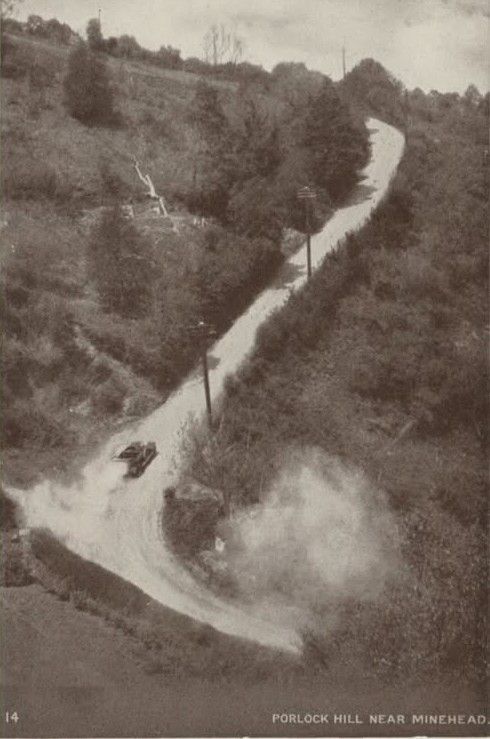
Porlock Hill is notorious for its steep gradient and long history of accidents, and it has acquired its own collection of ghostly stories.


Among them are reports of phantom coaches, a hearse and even an old man desperately attempting to stop his bicycle — all appearing briefly before vanishing near the hedgerows.


One particularly striking account concerns a coach and four apparently careering silently down the hill towards a Dormobile.


The driver of the van saw the ancient-looking vehicle and took evasive action, driving into a nearby field.


Three of the passengers also saw the coach.


The strange part came afterwards.


The phantom vehicle was reportedly seen to cross the road in front of another car, which appeared to pass straight through it.


Whether these experiences were caused by unusual atmospheric conditions, misidentification, or something less easily explained, Porlock Hill has certainly accumulated a remarkable body of folklore.


When the Coach Arrives Without a Driver


Some Somerset stories are particularly strange because the carriage itself seems almost incidental.


At Hinton Charterhouse Priory, the gates are said to open by themselves, allowing an invisible coach and horses to enter.


Those nearby may hear the sound of passengers inside, apparently distressed.


The gates then close again.


There is no visible coach.


Only the sounds remain.


It is a particularly old-fashioned form of haunting — not an apparition that walks through walls, but the continuation of an entire journey which seems to have no physical travellers at all.


At Coker Court in East Coker, another phantom carriage is said to drive into the courtyard, collect a passenger and then disappear.


At Merriott Manor, phantom horses and a coach are likewise said to pull up at the door.


And at Glastonbury Abbey Grange, a ghostly horse and carriage has been reported on the drive.


Taken individually, these are brief local stories.

Together, they form an intriguing pattern: across Somerset, the traditional horse-drawn carriage seems to have become one of the landscape's recurring supernatural visitors.


The Sound of Hooves


Not every ghostly journey can be seen.


Sometimes it is the sound that comes first.


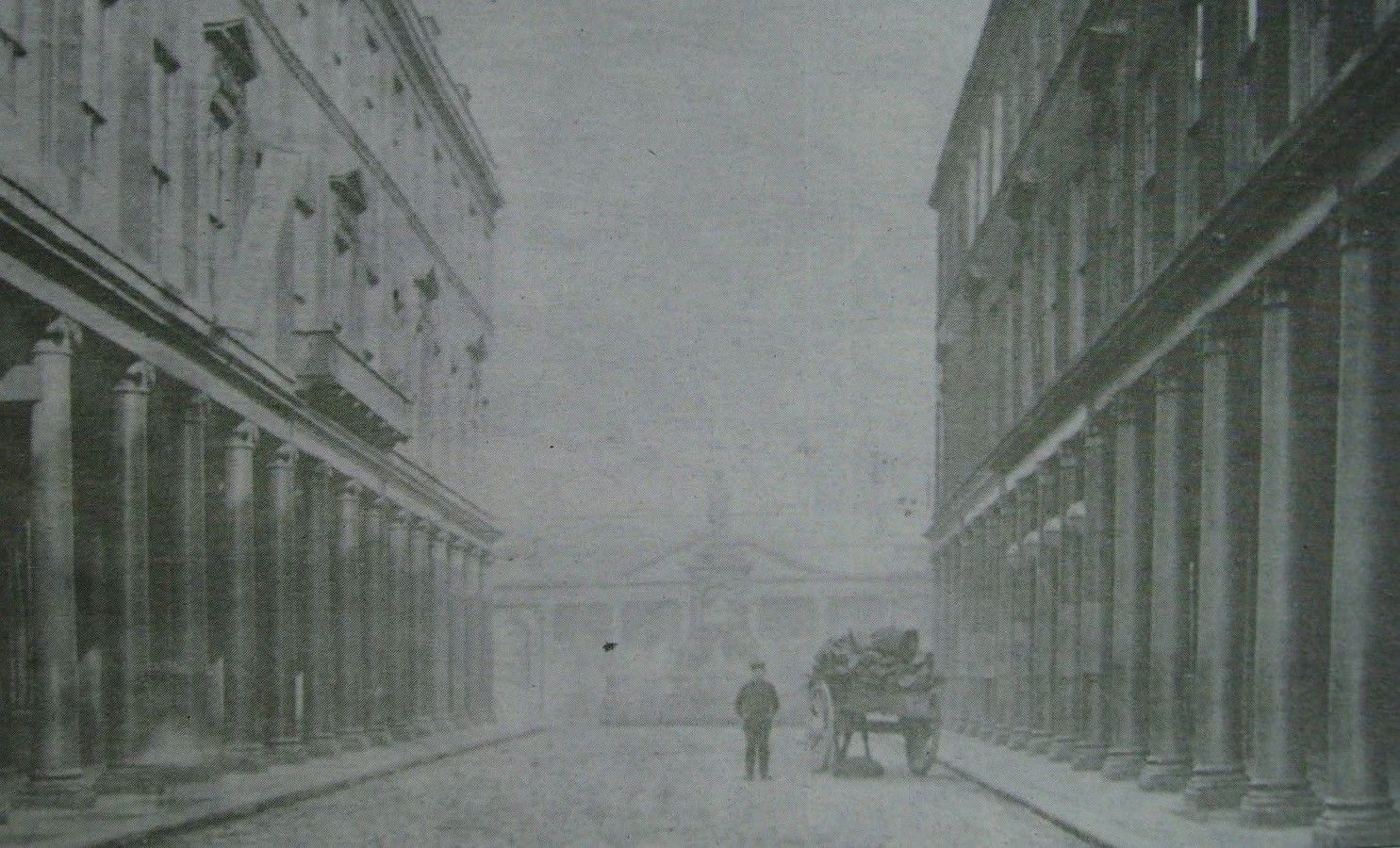
At Laura Place in Bath, although technically outside our Somerset focus, there is a particularly good example of this tradition: the sound of jangling harnesses and clattering hooves is said to pass by, accompanied by the sensation of displaced air as though an actual carriage had just swept past.


Similar stories occur in Somerset.


At Churchstanton, near Taunton, the sound of phantom hooves has reportedly been heard around Merlan Corner.

According to local tradition, the clip-clop is sometimes accompanied by a strange pale mist which appears to transform into a horse carrying a headless rider.


And on the main street of East Chinnock, a phantom galloping horse has reportedly been heard.


In some versions, the horse is connected with the story of an eloping couple — giving the haunting the feel of a journey that never quite reached its destination.


The Quantocks have their own traditions of unexplained horses, carriages and sounds.

Research into local folklore has recorded reports of galloping horses and the clash of metal around Cothelstone Hill and the ridge near Broomfield and Ruborough.

There is even a local family tradition of a crashing stagecoach apparently racing past a farm, complete with the sounds of breaking glass.


Perhaps these stories are reminders of how different the countryside once sounded.


Before engines, there were horses.


And when a horse galloped along a dark country lane at night, everyone knew exactly what the sound meant.


Perhaps that is why the sound has proved so enduring in folklore.


The Ghostly Riders


The phantom coach does not always travel alone.


Somerset has numerous stories of horsemen who appear briefly and then disappear.


At Midford Castle, a witness is said to have encountered a headless horseman.

The experience was reputedly so terrifying that the man's hair turned white overnight, earning him the nickname "Snowball".


At Camerton, on Skinner's Hill towards the A367, a cyclist reportedly saw what appeared to be a man on horseback just after sunset in 1984.


The figure wore a cape or long coat and a hat.


Then he simply faded away.


The witness had travelled the same route hundreds of times and never saw the horseman again.


At East Harptree, a cloaked figure on horseback is said to appear on the road outside the Castle of Comfort.

In this version, the rider seems to leap through a hedge on one side of the road and vanish through the hedge opposite.


And at Duddlestone, in the Taunton Deane area, tradition tells of a headless horseman in a flowing cloak riding a grey horse through the village.


The imagery is remarkably consistent.


A horse.


A rider from another age.


And then — nothing.


The Highwayman Who Never Gets Away


One of the most atmospheric Somerset phantom riders is associated with Thomas Pocock, the legendary highwayman of the Ashcott and Chilton Polden area.


According to local tradition, Pocock appears along the A39 riding a black horse.


The horse seems to gallop frantically, yet somehow never gets anywhere.


The rider is said to sit slumped in the saddle, apparently wounded, as though desperately trying to escape.


Some accounts place the apparition as recently as the late twentieth century.


The traditional explanation is that the ghost is that of Thomas Pocock, a highwayman who supposedly lived in the area in the early eighteenth century.


Little reliable historical information appears to survive about Pocock himself, and the Robin Hood-like details surrounding him belong largely to folklore. According to the legend, he robbed wealthy travellers and shared his spoils with the poor before eventually being captured and executed.


The story says that he once hid in a secret cave somewhere near Chilton Priory.


Perhaps, the legend suggests, this is why he continues to ride.


Still searching.


Still trying to escape.


Still never reaching his destination.


It is a wonderfully persistent piece of Somerset folklore — although the identification of the phantom with a historical Pocock should be treated as legend rather than established biography.


A similar horseman is reported at Loxley Woods near Shapwick, where a rider is said to gallop in one place, slumped over the horse's neck, before the horse moves away through the hedges and into the woods.


Again, local tradition sometimes identifies the rider with Thomas Pocock.


Black Horses, Black Coaches


Somerset seems particularly fond of the image of the black horse and black coach.


At Cutcombe, an accident blackspot, stories tell of a phantom runaway black coach and headless horses said to frighten motorists.


At Nunney, a large black horse and rider is said to trot down the main street towards the castle.


Sometimes a large black dog is said to accompany them.


The rider has been associated by local tradition with Richard Prater, who was forced to surrender Nunney Castle during the Civil War.


And at the mysterious, undisclosed Somerset location where a phantom hearse is said to travel slowly through a hamlet, the apparition has a darker significance: it is reputed to be an omen of an approaching death.


The idea of a spectral hearse is, of course, an ancient one.


The vehicle is not necessarily the ghost of someone who died.


Sometimes it is the warning.


A carriage from nowhere, appearing shortly before somebody in the living world is due to leave it.


The Phantom Coach and the Accident


A number of Somerset's ghost-coach traditions are connected with accidents.


At Monkton Farleigh, near the King's Arms, one story tells of a Victorian woman returning home late at night in her carriage.


Her horse suddenly bolted.


As the carriage approached the inn at speed, it struck a wall and overturned, killing her.


According to local tradition, ghostly screams can sometimes still be heard in the nearby lane, accompanied by the phantom thunder of hooves.


Whether the haunting developed from the accident or the accident was later woven into an existing ghost story is impossible to say.


But this is a recurring pattern in folklore.


A sudden death on the road becomes a journey which can never quite finish.


The coach continues.


The horses continue.


The rider never reaches home.


Ghostly Processions and Phantom Armies


Not every spectral journey involves a single carriage.


Somerset also has traditions of groups of ghostly figures.


On the road between Chewton village and Queen Charlton, there are reports of apparitions resembling soldiers riding old motorcycles.


The modern vehicles make this particularly unusual, although the location is known to have had army camps during the Second World War.


Elsewhere, the Quantock landscape carries older stories of unexplained military sounds.


Around Dowsborough Hill near Holford, local tradition records reports of the sounds of battle, sometimes associated with a supposed camp of Danish soldiers.


Around Cothelstone Hill and the Quantock ridge, there are also traditions of hearing the clash of metal alongside the sound of a galloping horse. One interpretation connects the sounds with the Viking battle traditions of the area; another simply regards the apparition as a phantom horseman.


These stories take us slightly away from the traditional phantom coach, but they belong to the same fascinating category of residual or repeating journeys — something from the past seemingly replaying itself across the landscape.


When the Horse Became a Motorcycle


As the twentieth century arrived, Somerset's supernatural transport stories did not necessarily disappear.


They changed.


At Dunkery, a phantom motorcyclist wearing a black helmet and leathers is said to appear to motorists.


In one particularly strange account, a driver stopped to avoid hitting the motorcyclist — only for the figure to vanish.


When the driver continued, he discovered that part of the road ahead had been swept away by flooding.


The obvious interpretation is that the phantom somehow prevented the driver from continuing into danger.


Was it a ghost?


A strange trick of the light?


Or simply a coincidence that became a story?


We cannot know.


But the tale has a striking resemblance to much older traditions in which supernatural travellers appear at precisely the moment they are needed.


At Frome, a photograph taken outside the Morton Guest House in 1990 has been interpreted as possibly showing a phantom motorcyclist — although a double exposure of the photographer is considered a much more likely explanation.


The location itself had a connection with a fatal motorbike accident in 1940.


Again, the story sits somewhere between photographic mystery, local history and ghost folklore.


The Ghost Car


Not all phantom vehicles belong to the distant past.


Near Shockerwick Bridge, on the old Bath road, there is a much more modern story.


Around midnight, an old blue Morris Minor is said to appear from nowhere and drive towards oncoming traffic.


It is an oddly specific apparition.


There is no spectral coachman, no galloping horse and no eighteenth-century clothing.


Just an old car suddenly appearing in the darkness.


And perhaps that is what makes it so interesting.


Ghost stories tend to preserve the technology of their own time.


Once coaches dominated the roads, the ghosts travelled by coach.


Then came the railway.


Then the motor car.


The vehicle changes.


The mystery doesn't.


The Ghost Trains of Somerset


Eventually, the journey leaves the road altogether.


Somerset's railway lines have their own collection of phantom sounds and apparitions.


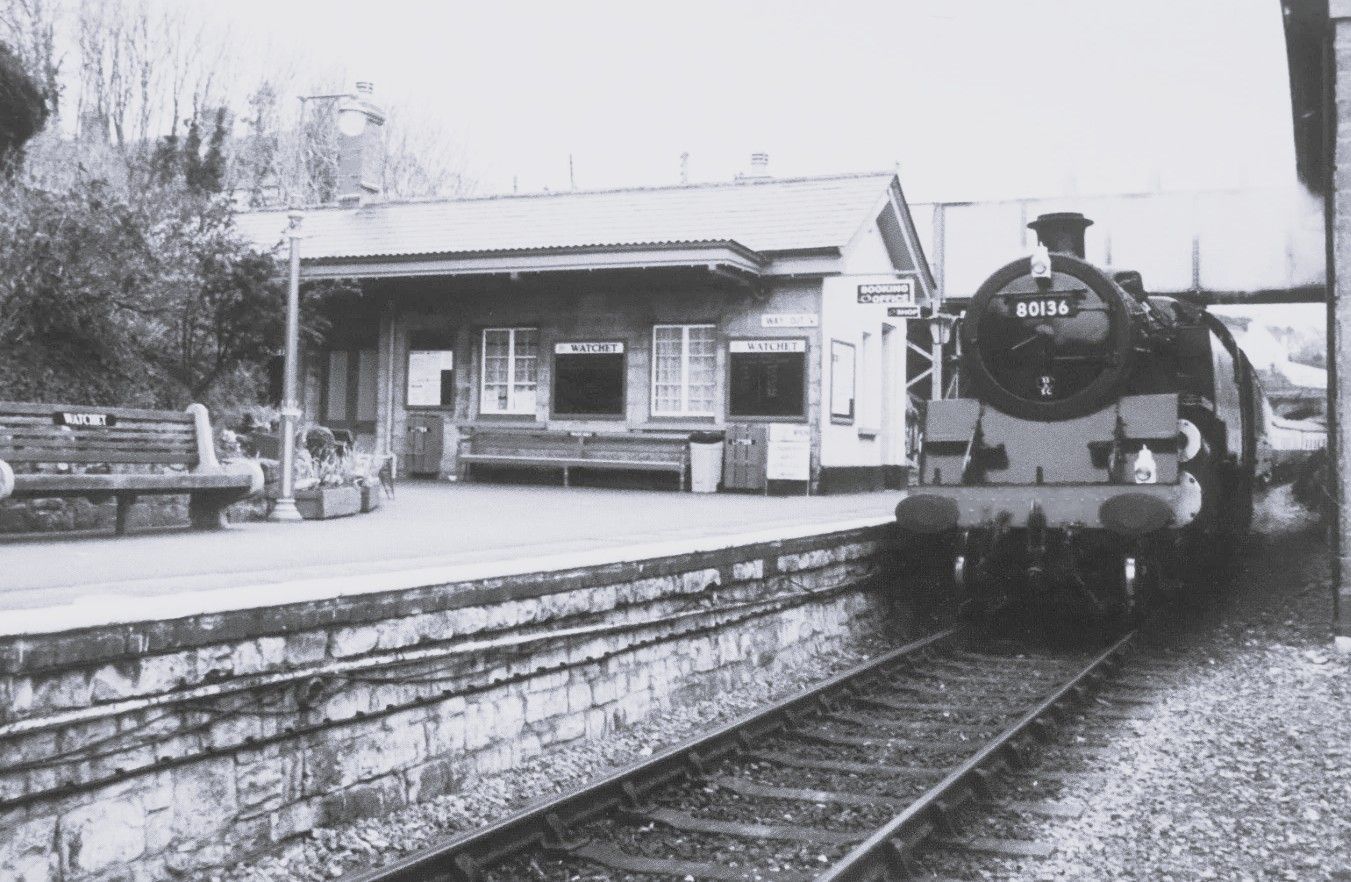
At Watchet, the legend is particularly striking.


A phantom steam engine has reportedly been seen after dark, sometimes appearing to travel along the railway when the line was disused and overgrown.


The apparition has been described as a locomotive pulling several trucks.


On other occasions, witnesses have reportedly seen only the glow of the firebox.


Sometimes the train cannot be seen at all.


It can only be heard.


The story has been associated with a fatal railway accident in 1857 in which three men died, although the connection is part of the later ghost tradition rather than something that can be established as fact.


The image is nevertheless wonderfully evocative:


A railway line in darkness.


A distant sound.


The suggestion of a steam engine approaching.


And then nothing.


The Somerset & Dorset Railway


The old Somerset & Dorset Joint Railwayprovides another setting for phantom railway stories.


Although the line closed in 1966, local folklore has preserved reports of distant steam whistles and the sound of trains approaching along sections where the railway is now gone.


People have described hearing:


* a distant steam whistle;

* the sound of a train approaching;

* rhythmic clanking and rumbling resembling wheels on rails;

* and, occasionally, the smell of coal smoke.


The Masbury Summit area, once the highest point on the Somerset & Dorset route, has its own atmosphere of railway folklore.


The summit was often shrouded in fog, and local tales tell of hearing trains labouring uphill through the mist long after the railway disappeared.


In some versions, a glow can apparently be seen moving through the fog before disappearing.


These stories are largely local folklore rather than formally documented hauntings.


But perhaps that is exactly what makes them interesting.


The railway has gone.


The tracks have gone.


The trains have gone.


Yet the landscape seems, in the stories at least, to remember them.


Keynsham — The Train That Passes in Silence


At Keynsham railway station, another phantom locomotive is said to pass through the station.


Unlike the noisy steam engines of the past, this one is reportedly silent.


Some accounts describe witnesses seeing the worried face of a driver as the ghostly train passes.


The story has been associated with an early twentieth-century railway apparition and sits neatly alongside Somerset's other phantom railway traditions.


At Kentsford railway station, the story is darker.


In August 1857, two trains collided, resulting in deaths.


Local tradition says that the sound of the collision can sometimes still be heard, with some witnesses even claiming to have seen an engine.


And at Vallis Vale near Frome, reports of a ghost train on the old railway track have been accompanied by strange noises and an uncomfortable feeling around the disused line.


Once again, the railway may be gone.


But in the folklore of Somerset, it seems that some trains never received the message that their journey had ended.


Journeys That Never End


There is something remarkably consistent about these stories.


The coach appears and disappears.


The horseman gallops but never reaches his destination.


The hearse arrives with no obvious passenger.


The motorcyclist vanishes.


The old car drives towards traffic and disappears.


The train approaches, but never arrives.


Perhaps this is why transport makes such an effective subject for ghost stories.


A haunting is usually imagined as a person who cannot leave.


But these stories suggest something slightly different: a journey that cannot end.


For centuries, Somerset has been crossed by people travelling from one place to another — travellers, coaches, horsemen, soldiers, lovers, highwaymen, railway workers and passengers.


The roads and tracks have changed.


The vehicles have changed.


The countryside has changed around them.


Yet the stories remain.


And somewhere in the darkness, according to Somerset folklore, there may still be a coach waiting to emerge from the mist, a horse galloping where no horse should be, or the distant sound of a train travelling along a railway that disappeared decades ago.


Perhaps the strangest thing about a phantom journey is not where it begins.


It is that it never seems to end.


© P Wallace - Somerset Paranormal

Source - Somerset Paranormal, Paranormal Somerset - Selena Wright

Images - Clipart, Wellcome Collection, PJW Artworks, Porlock Hill Postcard 1930


By Penni Wallace • October 31, 2026
Longleat is renowned for its magnificent Elizabethan house, its beautiful grounds and its long association with the Thynne family. But behind its grand rooms and impressive architecture lies another, rather darker history: a collection of ghost stories, unexplained occurrences and curious accounts that have become part of the estate’s folklore. Perhaps the best known is the tale of the Grey Lady and the unfortunate young footman whose disappearance is said to have haunted the house for generations. The Grey Lady and the Footman Beneath the Cellar One of Longleat’s most enduring ghost stories concerns Lady Louisa Carteret, who married Thomas Thynne, 2nd Viscount Weymouth, in 1733. According to the legend, Lady Louisa arrived at Longleat with her household staff, including a young footman. Before long, rumours began to circulate that the young servant and Lady Louisa had become rather too close. Whether there was any truth in the gossip is unknown, but the story takes a much darker turn. Thomas Thynne is said to have become consumed by jealousy. In one version of the tale, he confronted the young footman near the old library and a spiral staircase. During the ensuing argument, the unfortunate servant was pushed down the stairs, breaking his neck. Rather than admit what had happened, Thomas supposedly concealed the body in the cellar and told his wife that the young man had simply left his employment. Lady Louisa, however, was not convinced. She continued searching for the missing footman, becoming increasingly distressed by his unexplained disappearance. The story claims that she eventually fell ill and died in 1736, aged just 22, during childbirth. It is said that her spirit never found peace. The Grey Lady is reputed to wander a corridor known as Grey Lady’s Walk, searching for the missing servant. There have been accounts of mysterious footsteps, doors being struck and a figure moving through the house. The late Marquess of Bath was also said to have encountered her. The story gained an even more intriguing twist in 1903, when work was reportedly being carried out to install central heating. A skeleton was allegedly discovered beneath the house, accompanied by fragments of clothing and jackboots said to belong to a footman. According to the tale, the remains were quietly reburied in a local churchyard, close to the grave of Thomas Thynne. Whether the discovery was connected to the legend is impossible to establish, but it has certainly helped keep the story alive. The Bishop in the Library The Grey Lady is not the only spirit said to inhabit Longleat’s magnificent rooms. One of the most frequently repeated accounts concerns the library and an elderly gentleman dressed in dark or scholarly clothing. He is sometimes identified as Bishop Thomas Ken, the former Bishop of Bath and Wells, who spent the later years of his life at Longleat as a guest of the Thynne family. Ken was a notable religious figure of the seventeenth century and died at Longleat in 1711. According to reports, a figure resembling an elderly scholar has been seen sitting in the library, apparently absorbed in a book. On other occasions, witnesses have described seeing someone who simply disappears when approached. The Red Library has its own stories, too. An elderly man dressed in black is said to have been seen reading there, while another apparition is described as a tall, dark-haired young man. Some accounts suggest this younger figure may be connected with a member of the Thynne family who was killed during the First World War. It is possible that some of these descriptions refer to the same apparition, or that different stories have become intertwined over time. Either way, the library seems to have acquired quite a reputation. Lady Alice – The Mischievous Little Ghost Not all of Longleat’s ghost stories are quite so sombre. The house is also associated with the spirit of a young girl, Lady Alice Thynne, who died in 1847. She is said to remain at Longleat, occasionally making her presence known through unexplained mischief around the house. The stories surrounding her are sufficiently well known that Longleat itself has included Lady Alice in its own Halloween ghostly tales. There is something particularly poignant about the idea of a child’s spirit remaining in the place that was once her home, although the accounts of her activities are generally more playful than frightening. The Black Dog of Longleat Longleat also has a connection with one of the oldest traditions in British folklore: the mysterious black dog. For centuries, stories of large, dark, sometimes spectral dogs have been told throughout Britain. Often associated with lonely roads, ancient tracks and wooded places, these creatures are sometimes regarded as omens or supernatural guardians. Longleat is said to have its own black dog, with local accounts associating the apparition with the estate’s woodland. There is even a place known as Black Dog Wood, adding another layer to the folklore surrounding the grounds. Whether the story began with an unexplained sighting, a local superstition or an older tale passed down through generations, it fits neatly into the wider tradition of Britain's mysterious black dogs. The Stone-Throwing Monk Among the stranger stories associated with Longleat is that of a mysterious monk-like figure, reportedly connected with unexplained stones being thrown. Accounts of the figure are rather less consistent than those of the Grey Lady or the library apparition, but the tale adds an unsettling element to the estate’s ghostly reputation. The image of a shadowy religious figure appearing around an old country house is an intriguing one, particularly given the long history of religious upheaval and changing ownership that forms part of the wider story of the English countryside. Strange Occurrences Around the House Not every account at Longleat involves a clearly seen apparition. Some of the reported experiences are much more subtle. Visitors and those familiar with the house have spoken of doors slamming when nobody is nearby, the sound of a young girl's voice being heard as the house closes for the evening, and unexpected scents of lavender appearing without an obvious explanation. These are among the experiences mentioned in Longleat's own ghost-tour material, which explores the stories and strange happenings associated with the house. A Shadow in Wolf Wood More recently, Longleat attracted attention after a shadowy figure was reportedly captured on camera in Wolf Wood, within the Safari Park. In October 2025, Dr Tom Lewis, Longleat's conservation and research manager, spoke about the unusual figure seen on camera-trap footage. The woodland itself has an interesting history: it was once a formally planted grove, and in the 1730s the 2nd Viscount Weymouth kept a menagerie there. Longleat's archivist also recalled stories of the 2nd Marquess of Bath visiting the plantation by moonlight, although she was not aware of earlier ghost reports from the Safari Park area. The figure remains unexplained, but its appearance has added a very modern chapter to Longleat's collection of ghostly tales. A House Full of Stories From the tragic tale of Lady Louisa and the missing footman to the scholarly figure in the library, the mischievous child, the black dog and the shadow in Wolf Wood, Longleat has no shortage of stories to keep its ghostly reputation alive. Some are rooted in the lives of real historical figures; others have been passed down as local legends, changing and developing with each retelling. And, as with so many old houses, it can sometimes be difficult to separate the history from the folklore. Perhaps that is part of Longleat's enduring fascination. Behind its beautiful rooms and grand façade are centuries of family history, secrets, rumours and unexplained accounts — and the possibility that not everyone who once called the house home has quite left it.  © P Wallace - Somerset Paranormal Sources - Longleat Images - Longleat Past & Present
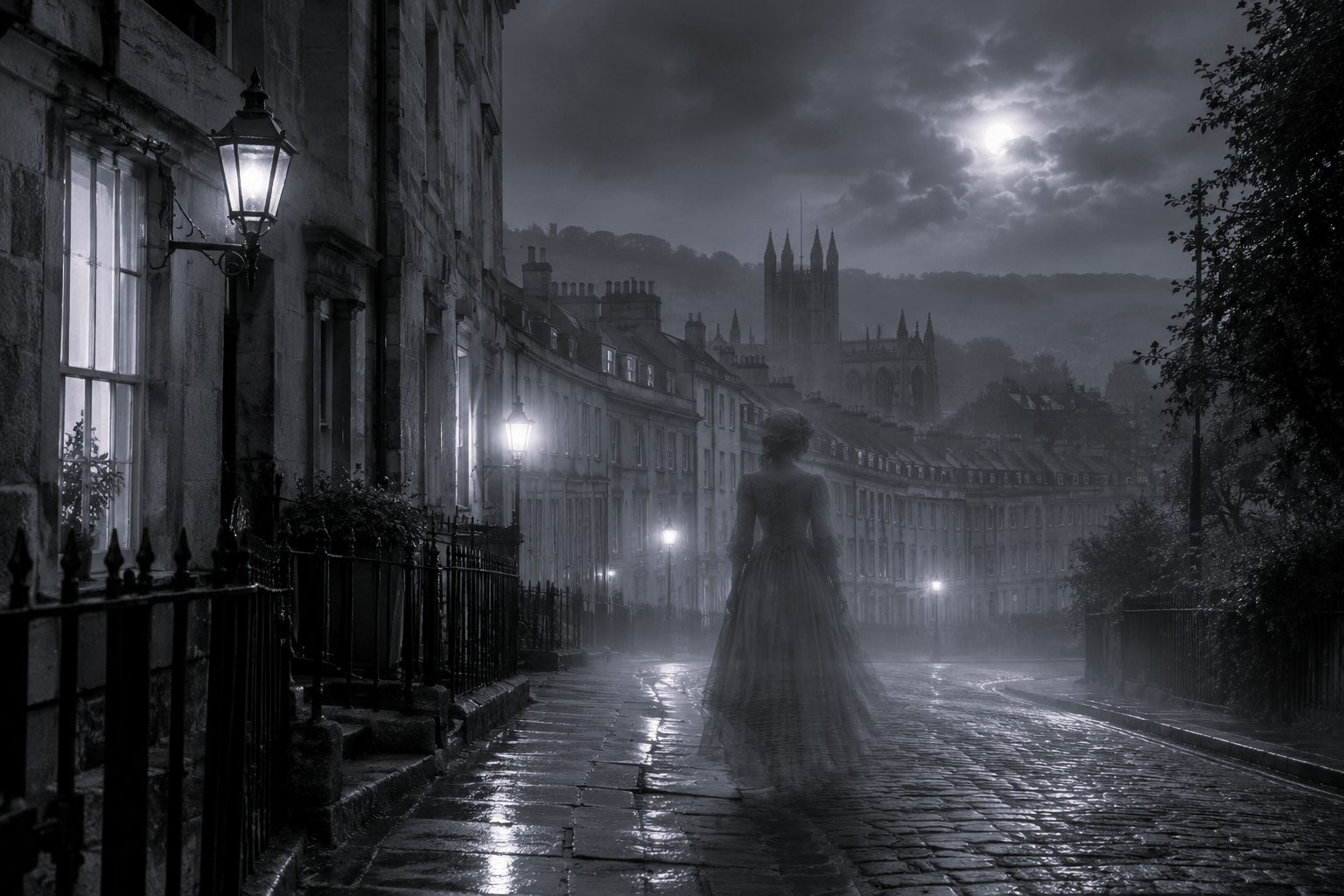
ghost lady in the streets of Bath
By Penni Wallace • October 30, 2026
Discover the ghostly women of Bath, from mysterious ladies in grey to tragic brides and forgotten legends. Explore the haunted history of Bath and its surrounding streets.
By PJ Wallace • October 29, 2026
Punkie Night: A Somerset Spectre’s Tradition When the last Thursday of October descends upon Somerset, the air grows chill and the fields of the West Country whisper with an ancient song. For on this night—Punkie Night—children parade through the lanes, their faces lit by the flickering glow of hollowed roots. They chant a haunting refrain that echoes through the darkness: "It’s Punkie Night tonight, It’s Punkie Night tonight, Adam and Eve would not believe, It’s Punkie Night tonight." No soul can say for certain how this eerie rite began. Some claim it is bound to Hallowe’en itself, that night when the veil between worlds thins. The word “Punkie”—an old English name for a lantern—hints at the light that defies the shadows. But unlike the modern pumpkin, these lanterns were once carved from swedes or mangel-wurzels, their twisted grins glowing from pale, gnarled flesh. Others whisper that Punkie stems from punk—tinder that sparks fire—perhaps a clue to the old ways now half-forgotten. Across the centuries, the custom has glimmered in many places: upon the windswept crest of Castle Neroche in the Blackdown Hills, through Long Sutton, and most enduringly, in Hinton St George and Lopen, where the night still belongs to the Punkies. The Legends Behind the Lanterns Local lore tells of the men of Hinton St George, who would vanish to the fair at nearby Chiselborough, returning home drunk and stumbling through the black October night. To find their way, they set candles within hollowed roots, their makeshift lights bobbing eerily in the mist. Yet some tales turn the story on its head. They say it was the women who carved the lanterns—fashioning Punkies from the harvest’s remains—and went searching for their wayward husbands. Some even knocked at doors, begging for mangel-wurzels and candles, their plea giving birth to the Punkie Night song that still drifts through village lanes. Others tell that when the drunken men glimpsed those ghostly lights, they mistook them for spirits or “ghoulies,” fleeing home in terror—proof that even the living may be haunted by their own folly. Though cloaked in folklore, the roots of Punkie Night stretch much deeper—a flicker of Samhain’s ancient fire, carried down through the centuries. It is a night when the old world breathes again, when lanterns gleam like souls in the dark, and the West Country remembers that not all lights are meant to guide the living.  © Somerset Paranormal Image © PJW Artworks #punkienight #somersetfolklore #somersettraditions #somersetpunkienight #Halloween #halloweentraditions
By Somerset Paranormal • October 29, 2026
The Lady of Chew Valley Lake: The Legend of Catherine Brown Beneath the waters of Chew Valley Lake, near Bristol, lies a landscape that was once home to farms, houses, roads and the small settlement of Moreton. During the 1950s, the area was cleared to make way for the reservoir, which opened in 1956. Today, much of that former landscape lies beneath the water, although traces of the old settlement and its roads can sometimes become visible when water levels fall. It is against this haunting backdrop that the legend of Catherine Brown is told. According to local folklore, Catherine was a young woman who lived in Moreton in the early twentieth century. The story describes her as a troubled teenager who would sometimes disappear for long periods, causing concern to her parents. One day, she reportedly failed to return home, prompting a search involving her family and local people. During the search, Catherine's mother is said to have told the others that she needed to return home. What happened next is perhaps the strangest part of the tale. According to the story, Catherine's mother later saw her daughter arrive home, soaking wet and unusually silent. Catherine is said to have gone upstairs to her bedroom, where her mother left her undisturbed for the night. The following morning, however, Catherine was reportedly nowhere to be found. A subsequent search allegedly led to the discovery of her body in the water at Stratford Corn Mill, less than a mile away. Some versions of the story claim that she had already been dead for around 24 hours. If the tale is true, had Catherine's mother seen her daughter's spirit return home that night, unaware that she had already died? There is an important distinction between the legend and the historical record: I have not found contemporary evidence confirming Catherine's death or the circumstances described in this account. For now, the story is best treated as local folklore rather than established fact. The Ghostly Woman by the Lake The story does not end with Catherine's supposed death. Over the years, accounts have circulated of a mysterious young woman seen in the vicinity of Chew Valley Lake. She is described as wearing old-fashioned clothing, with long, wet hair, appearing as though she has emerged from the water itself. Reports of these sightings attracted attention in 1999, when local newspaper articles discussed a mysterious figure sometimes referred to as the Lady of the Lake. One reported encounter involved a driver and two passengers travelling along the B3114. They allegedly saw a woman appear in the road before drifting across it. Descriptions attributed to the witnesses spoke of long, wet, wavy hair and old-fashioned dress. The driver is said to have stopped at a nearby pub and contacted the police. The account was subsequently discussed at a local historical or paranormal meeting, where other people reportedly described similar experiences. These reports help establish that stories of a ghostly woman were circulating in the area by the end of the twentieth century. Whether the apparition was Catherine Brown, however, remains a matter of speculation. There are also suggestions of sightings of a similar figure around Barrow Gurney Lake, although it is unclear whether these accounts concern the same supposed apparition. A Ghost, or Something in the Mist? Not everyone would interpret these sightings as supernatural. Chew Valley Lake can produce atmospheric conditions in which mist forms over or around the water. In the right light, moving fog, reflections and shadows can create the impression of a figure crossing a road or moving through the landscape. Could the Lady of Chew Valley Lake be a ghostly presence returning from a tragic past? Could the legend of Catherine Brown have grown around unexplained sightings, with the story and the apparition becoming intertwined over time? Or might there be a more natural explanation for what witnesses believe they have seen? The original story of Catherine remains unverified, but the legend continues to offer a haunting image: a mysterious, water-soaked woman appearing beside a reservoir beneath which an older landscape lies hidden. What do you think? Have you heard of the Lady of Chew Valley Lake, or do you know of any older accounts of Catherine Brown?  © PJW - Somerset Paranormal
By P Wallace • October 23, 2026
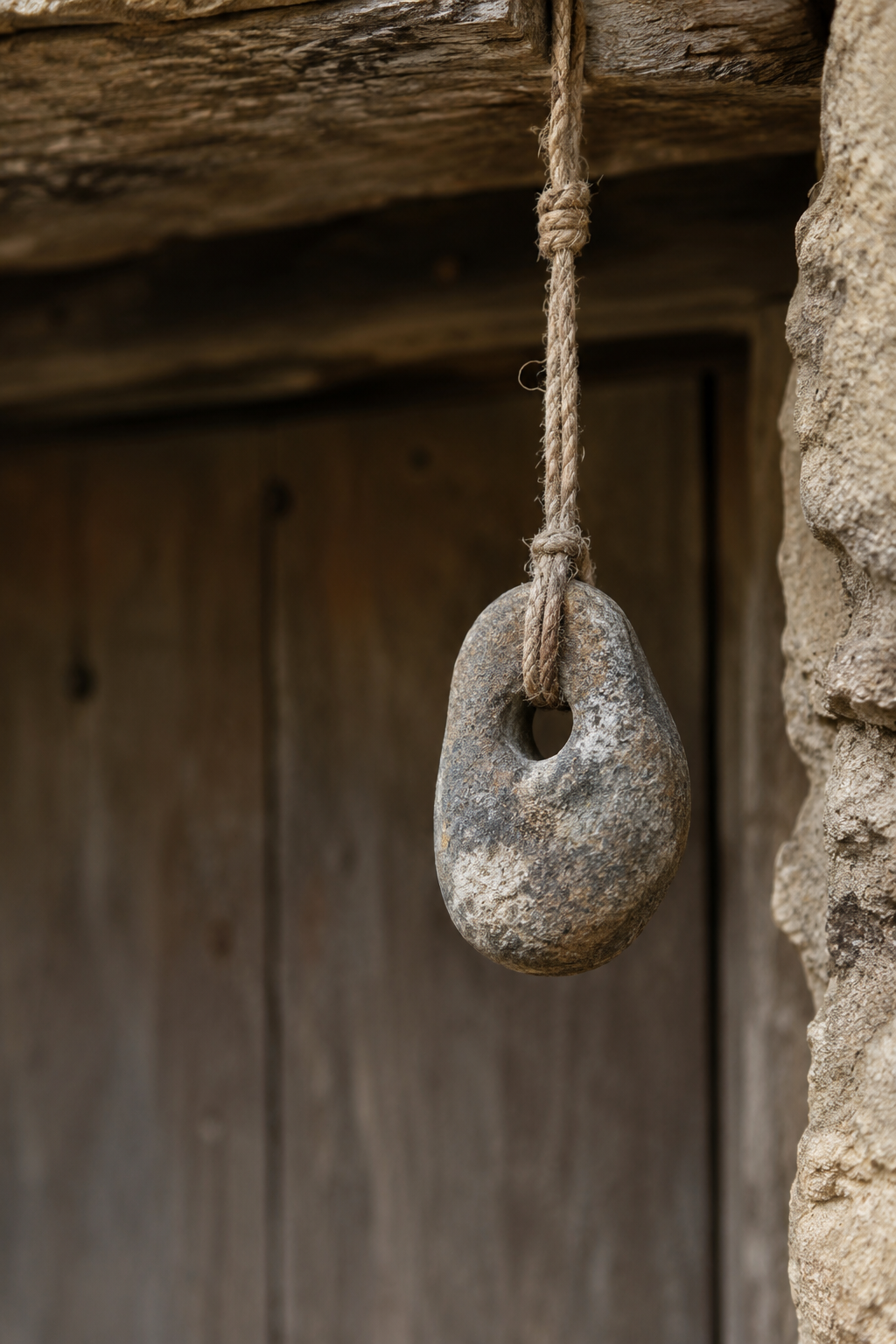
The old belief that witches could visit the living in their sleep, pin them down and leave them terrified by morning. Imagine waking in the darkness, conscious of your surroundings but unable to move. Something presses upon your chest. You struggle to cry out, yet no sound comes. Perhaps you sense a presence beside the bed — or see a familiar face watching you from the shadows. For centuries, experiences such as these could be interpreted as something far more sinister than a bad dream. In parts of Britain, people believed they had been visited during the night by a witch or supernatural hag. The experience was known as hag-riding. It was not simply a frightening tale told beside the fire. In the West Country, this belief could have very real consequences, sometimes leading to accusations of witchcraft and physical attacks upon those suspected of causing the torment. What was hag-riding? Hag-riding, sometimes called hagging, was the belief that a witch or malevolent night visitor could attack someone while they slept. Victims might describe a crushing weight upon the chest, difficulty breathing, an inability to move and the terrifying sensation that another being was present. The word nightmare itself has older associations with this nocturnal oppression — the feeling of being held down or crushed by an unseen force. In some traditions, the attacker was imagined as an old woman or hag sitting upon the sleeper's chest. Elsewhere, the experience was blamed on a living person believed to possess harmful supernatural powers. The details varied, but the fear was much the same: something had come in the night, and the victim had been powerless to stop it. A presence in the darkness Today, some of these descriptions sound remarkably like sleep paralysis , a recognised sleep phenomenon that can occur as a person is falling asleep or waking. The mind becomes conscious while the body's temporary muscle paralysis associated with dreaming has not yet lifted. The person may be unable to move or speak, feel pressure upon their chest, or sense an intruder in the room. Some even see frightening figures or shadows. Although sleep paralysis is understood today as a sleep-related phenomenon, it can feel extraordinarily real. Across different cultures, similar experiences have been interpreted as visits from spirits, demons, witches or other supernatural beings. It would be too simple to say that every historical account of hag-riding was a case of sleep paralysis. We cannot know exactly what happened in every instance. But the similarities help us understand how a frightening experience could be interpreted through the beliefs of the time. For someone who believed witchcraft was a real threat, waking unable to move and feeling a presence nearby might seem compelling evidence of an attack. The experience could be terrifying; the explanation depended upon the world in which the person lived. When the nightmare became witchcraft In popular belief, witches were feared not only for supposedly causing illness or misfortune, but for tormenting people through supernatural means. Hag-riding made this threat intensely personal: the supposed witch entered the bedroom and attacked the victim in their most vulnerable moments. If frightening nights continued, a person might come to believe they recognised the attacker. Existing quarrels, local suspicions or a neighbour's reputation could reinforce that conviction. What began as a terrifying experience in the darkness might spill into daylight, becoming an accusation of witchcraft — sometimes with serious consequences. Historian Owen Davies has documented cases of hag-riding accusations in nineteenth-century West Country England, showing that these beliefs survived long after the great period of witch trials had passed. Charms against the hag If the danger was believed to arrive at night, protection had to be close at hand. One object associated with this folklore was the hag-stone — a naturally occurring stone with a hole through it. Such stones were hung near beds or in stables, where they were believed to guard against nocturnal attacks. Horses that appeared exhausted or had tangled manes might also be thought to have been hag-ridden. Prayers and other protective charms could offer reassurance, too. A familiar bedtime prayer was not merely a comforting ritual; it might also be understood as a defence against unseen dangers. These customs belonged to a wider tradition of protective folklore, and not every charm was used specifically against hag-riding. Their meanings varied between places and periods, but they reveal how seriously people could take the threat of supernatural harm. Hag-riding in Victorian Somerset It is easy to imagine that belief in witches disappeared with the witch trials. Yet folklore rarely vanishes so neatly. Historian Owen Davies identified at least six court cases involving assaults connected with hag-riding accusations in Somerset and Dorset between 1852 and 1875. These reports offer a remarkable glimpse into a world where a belief in supernatural attack could still influence real behaviour. One particularly striking case reached the newspapers in January 1875. At Weston-super-Mare, 72-year-old widow Hester Adams was brought before the magistrates after attacking Maria Pring, whom she believed had been tormenting her and her husband at night. Adams described the supposed visitor as appearing spiritually rather than coming bodily, and believed that drawing blood would break the spell. When asked in court what she meant by hag-riding, Adams described it as a person coming to terrify others at night. The case attracted attention well beyond Somerset, with newspapers reporting on a belief many readers considered an astonishing survival from an earlier age. Yet for Adams, this was no mere old wives' tale. She believed she was under supernatural attack and acted against the person she held responsible. The 1875 case was not the only example found in contemporary reports. A Dorset case from 1871 also involved an accusation of hag-riding, in which a young man and an elderly woman were involved. Together, these reports show that the belief was not confined to one extraordinary incident. The last newspaper trail: Somerset, 1929 Nor had the belief entirely disappeared by the end of the Victorian era. In 1929, a dispute between the Sheppard and Lock families on the Somerset peat moors, between Langport and Aller, led to another accusation of hag-riding. Following a series of misfortunes, George Sheppard accused Reuben Lock and his wife of being responsible for the nocturnal torment. This is the latest example I have so far found in the British Newspaper Archive. It does not prove that hag-riding belief ended in 1929, but it offers a remarkable glimpse of an old supernatural explanation surviving into the twentieth century. From frightening experiences in the night to protective stones, accusations of witchcraft and disputes brought into the public eye, hag-riding reveals how deeply folklore could shape people's understanding of the unexplained. The hag might have been invisible to everyone else, but for those who believed they had been ridden in the night, the fear — and sometimes the consequences — were very real. © PJW Image - PJW Artworks Newspaper Articles - British Newspaper Archives 1875
By Penni Wallace • October 21, 2026
Somerset & Bath Paranormal is now also on Substack
By Somerset Paranormal • October 21, 2026
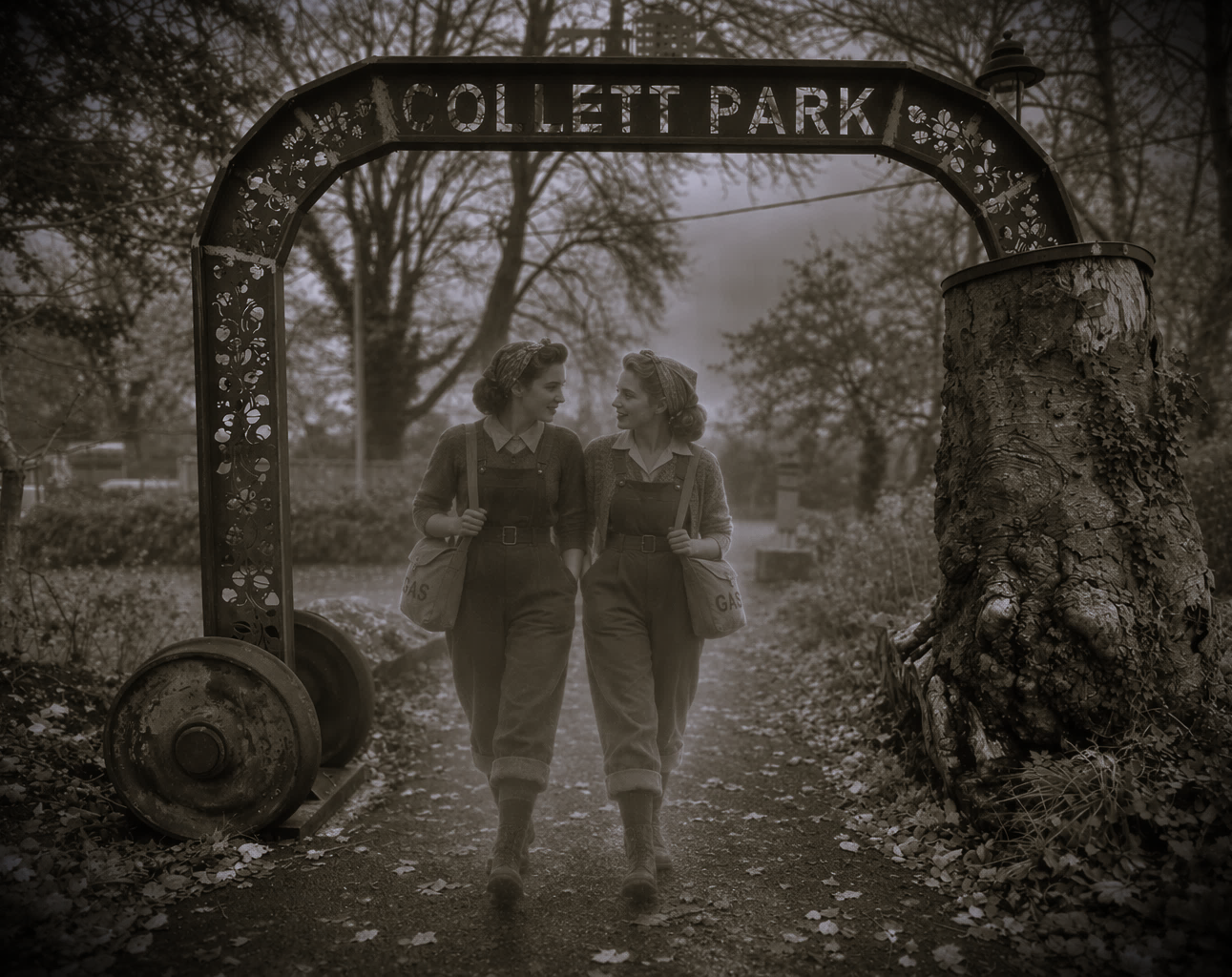
History - Collett Park owes its existence to John Kyte Collett, a successful businessman who was born in Shepton Mallet in 1836. The story goes that as a boy, Collett was frustrated by being turned off privately owned fields where he and other local children played. He apparently never forgot the experience, and many years later, having made his fortune in Cardiff, he began buying up pieces of land in Shepton Mallet. On 20 June 1906, he presented the land to the town as a public recreation ground, creating the park that now bears his name. Just three years later, in 1909, the park received a royal visit from the Prince and Princess of Wales, the future King George V and Queen Mary, who came to thank Collett personally for his generous gift to the town. Today, Collett Park remains one of Shepton Mallet's much-loved green spaces. Reported Encounter - Perhaps one of the more intriguing stories connected with Collett Park is one with a wartime link. A local story, as told recently on 'The Other Side' BBC Somerset tells of someone walking through the park who saw two young women dressed as Land Girls making their way through the grounds. There was nothing particularly remarkable about them at first — until the realisation dawned that the women appeared to belong to another time. The witness was able to describe the women's Victory roll hair styles, clothing, they had gasmask bags and the fact they were deep in conversation together, she thought they were real people, re enactors or in costume for something, but she looked back to check on her dogs and they had vanished..! She checked local events and couldn't see anything that would explain why they were there.. The Women's Land Army was very much a part of life in rural Somerset during the Second World War, with young women sent to work on farms and in agriculture as part of the wartime effort. So two Land Girls walking through Shepton Mallet would once have been an entirely ordinary sight. Today, however, a fleeting glimpse of two young women in wartime clothing feels rather different — perhaps a rare privilege, to catch a moment from the past lingering quietly in the present, a brief glimpse of what might be a residual haunting. Source - The Other Side - Secret Somerset - BBC/ Luke Knight Listen here - Secret Somerset - The Other Side - Land girls in the park - BBC Sounds Image - PJW Artworks Photo - Shepton Mallet Nub News
By P Wallace • October 10, 2026
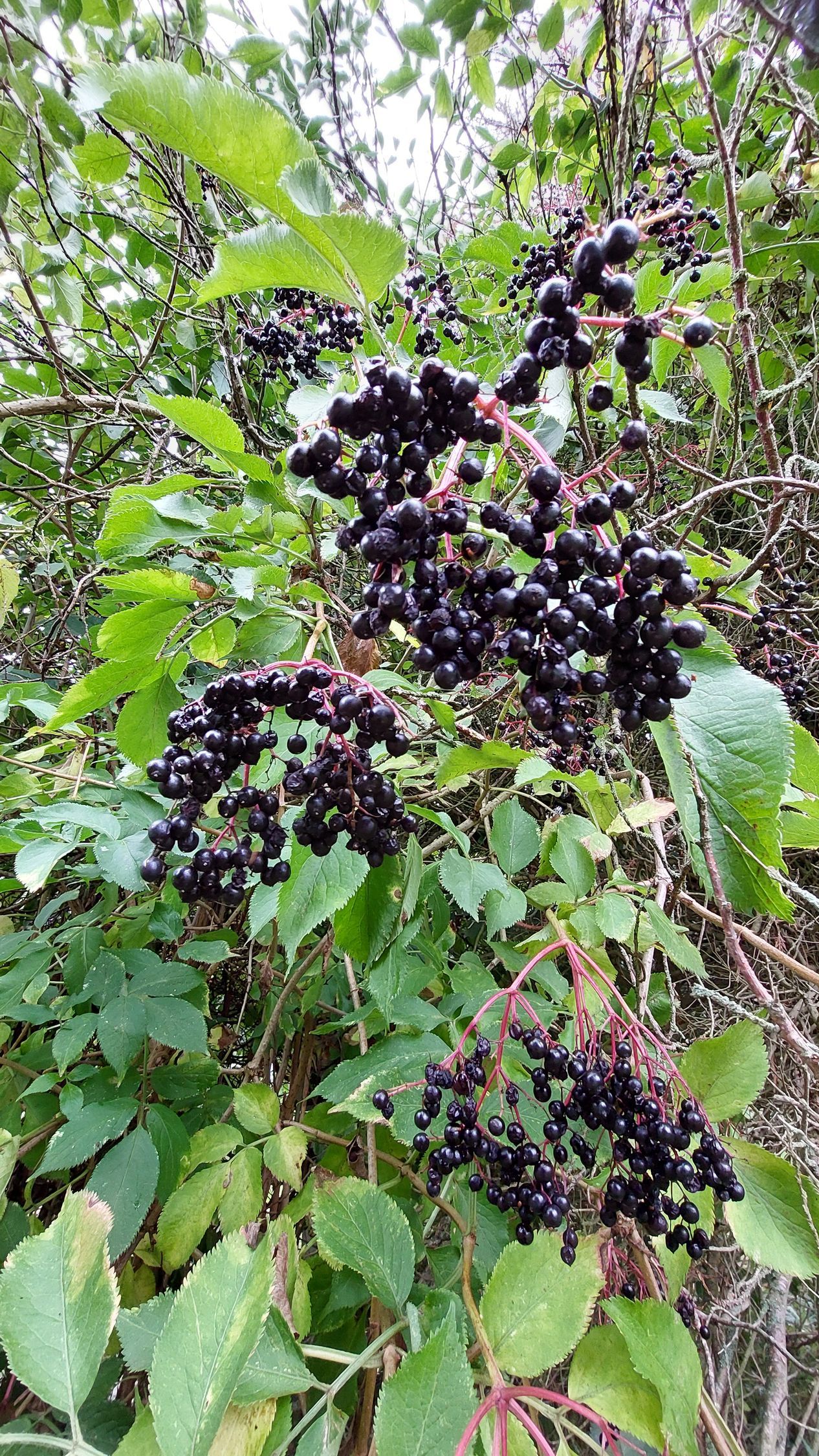
Elder A Tree of Spirits, Stories and Somerset Superstition. Among the hedgerows of Somerset, the elder tree stands quietly — but never entirely innocently. For centuries, elder has been treated with a curious mixture of respect, usefulness and superstition. Across Britain, it has been associated with healing, protection, witchcraft, spirits and death. At the heart of much elder folklore is the belief that the tree is inhabited — or protected — by a female spirit known as the Elder Mother, the Old Lady or the Old Girl. And in Somerset, elder has its own darker stories. The Elder Mother: Spirit of the Tree The Elder Mother was said to dwell within the elder tree and to take offence if her wood was cut without permission. In some parts of England, anyone wishing to take a branch was expected to ask the tree's permission first. One traditional charm was: “Old Woman, give me some of thy wood and I will give thee some of mine when I grow into a tree.” The wording varies between traditions, but the meaning is the same: the tree was not to be treated as ordinary wood. To take elder without permission could bring bad luck or illness, and stories were told of people who suffered misfortune after offending the spirit of the tree. The belief was strong enough that elder wood was sometimes avoided altogether for household objects. The idea of the Elder Mother was not confined to Somerset. Similar traditions are found across Britain and Scandinavia, where the spirit was sometimes known by names such as the Danish Hyldemoer, or Elder Mother. * A Witch in the Somerset Elder Somerset has its own particularly strange elder-tree tale. In the story, a farmer sees what appears to be an old woman — a witch — beneath or within an elder tree, and discovers that she has been secretly milking his cow. He shoots at her with a silver bullet, but misses. The witch flees towards the farmhouse, where the farmer's grandmother takes matters into her own hands. She picks up a burning coal from the fire and throws it at the elder tree. The witch is killed. It is a wonderfully Somerset kind of folktale: an ordinary rural setting, a familiar farmyard, and something distinctly supernatural hiding amongst the hedgerows. The story is recorded as a Somerset folk-tale in discussions of the Elder Mother and elder-tree witch traditions. * Never Burn Elder Wood Elder also acquired a reputation as wood that was best left alone. Across British folklore, burning elder could be considered unlucky, and stories warned of what might happen if the wood was brought into the home or put upon the fire. The Elder Mother might follow the wood indoors, bringing trouble with her. Other traditions said that the wood's popping and cracking in the fire was the sound of the spirit protesting. There was also a practical reason for elder's unusual reputation: its hollow, soft wood was not especially desirable as ordinary firewood, while the tree itself was valued for food, medicine and numerous household uses. So the warnings surrounding elder may have helped preserve a useful tree as much as they expressed supernatural fear. *Witches, Protection and Magic Elder has always had a distinctly double-sided reputation. It could protect — but it could also punish. In English folklore, elder was associated with protection from evil spirits, witches, lightning and other dangers. Elder branches or crosses were sometimes used around barns, houses and livestock. At the same time, witches were believed in some traditions to be able to take the form of elder trees. The tree therefore occupied an uneasy place in folklore: protector, healer, witch and spirit all at once. An old English tradition even held that elder could protect against lightning, while carrying elder twigs could guard against certain ailments. *Healing, Magic and the Elder Berry For all its darker associations, elder was also one of the great useful plants of traditional rural life. Its flowers and berries were gathered for food and medicine, and elder preparations appear throughout historical herbal traditions. Elderflower was used in traditional remedies for fevers and other complaints, while elderberries were made into syrups, wines and other preparations. This mixture of practical usefulness and supernatural reputation is perhaps what makes elder folklore so fascinating. It was a tree that could feed you, heal you — and, according to the old stories, take offence if you treated it badly. Kew notes the elder's long-standing reputation as both protector and avenger, with the Elder Mother said to curse those who harmed the tree. *Death, Spirits and the Elder Tree Elder's association with death is another recurring strand of its folklore. The tree was connected with spirits, witches and the boundary between the living world and the supernatural. In some traditions, elder growing around places associated with the dead was seen as protective. Its connection with both beginnings and endings has given elder an especially liminal character in folklore. It belongs to the hedgerow, the cottage garden, the churchyard and the boundary — places where the ordinary world and the supernatural have traditionally been imagined to meet. *A Tree of the Hedgerow Perhaps this is why elder feels so at home in Somerset folklore. It is not a grand ancient oak standing alone on a hill. It is the tree beside the lane. The tree growing through the hedge. The white blossom beside the cottage. The dark berries appearing at the end of summer. The ordinary tree that, according to generations of rural stories, might contain something watching from within. The folklore of elder is found throughout Britain, rather than belonging exclusively to Somerset. But Somerset has contributed its own memorable stories — including the tale of the elder-tree witch — to a much wider tradition surrounding this curious and much-feared tree. **Folklore Disclaimer This piece explores traditional folklore, superstition and rural belief. Elder folklore varies considerably between regions and communities, and not every custom was practised everywhere. The traditions described here belong to the wider folklore of Britain, with particular reference to West Country and Somerset material where this can be identified. They should be understood as folklore and oral tradition rather than established historical fact. Folklore is cultural memory: a mixture of belief, superstition, storytelling and local tradition. *Sources & Notes This article draws on established British and European elder folklore, including: Katharine Briggs, A Dictionary of Fairies Charlotte Sophia Burne, Shropshire Folk-Lore Christina Hole, English Folklore Nicholas Culpeper, The Complete Herbal Folklore Society collections and published folklore studies Historical and botanical accounts of elder traditions The Elder Mother, the custom of asking permission before cutting elder, the tree's associations with witches and spirits, and its medicinal uses are all well-established elements of elder folklore. The Somerset elder-tree witch story is a particularly useful example of how these wider traditions became part of local West Country storytelling. © Somerset Paranormal Read more on my new Substack publication - Somerset Hidden History, Mystery & Folklore | Penni Wallace | Substack Images - flowerfairies. com, RitaE - Pixabay Petals and Stone - Somerset
By Bath Paranormal • September 23, 2026
Born on 16 December 1775, Jane Austen remains one of England’s most beloved authors — yet her relationship with Bath was complicated. She lived in the city for several years, drew inspiration from it, disliked it intensely, and ultimately left with a sense of relief. But with such a strong connection to the place, some wonder whether her spirit ever returned. Jane Austen’s Bath Years (1801–1806) When Jane Austen moved to Bath in 1801, the city was a fashionable spa resort, bustling with visitors seeking health, society, and entertainment. Although she never warmed to the city, Bath became the backdrop for two of her six published novels: Northanger Abbey and Persuasion. During her association with Bath — roughly six years — she lived in four different houses, each marking a chapter of her family’s shifting circumstances. 1799 – 13 Queen Square Jane stayed here for a month with her mother during a summer visit. 1801–1804 – 4 Sydney Place After her father, Rev. George Austen, retired from his parish at Steventon, the family settled at 4 Sydney Place. A bronze plaque now marks it as Jane’s principal Bath residence. 1804–1805 – 27 Green Park Buildings The Austen’s moved here on a short lease. It was in this house that Jane’s father died in January 1805. 1805–1806 – 25 Gay Street Jane, her mother, and her sister Cassandra relocated to Gay Street, close to what is now the Jane Austen Centre. They remained only a little over a year before leaving Bath permanently. By the summer of 1806, the family departed for Clifton, then Southampton, and finally Chawton, Hampshire, where Jane spent eight productive years before her death in 1817. She is buried in Winchester Cathedral. Her Feelings About Bath Despite Bath’s influence on her writing, Jane Austen never hid her dislike of living there. After leaving, she wrote to her sister Cassandra: “It will be two years tomorrow since we left Bath for Clifton, with what happy feelings of escape.” Her novels echo this sentiment. In Northanger Abbey, Isabella Thorpe famously complains: “I get so immoderately sick of Bath… we would not live here for millions.” Yet Austen’s detailed observations of Bath society — its balls, promenades, gossip, and social rituals — are woven seamlessly into her fiction. Even if she disliked the city, she understood it intimately. Did Jane Austen’s Ghost Ever Return? With four Bath addresses tied to her life, and two novels rooted in its streets, it’s natural to wonder whether Jane Austen’s spirit lingers in the city she escaped from. There are no confirmed sightings of her ghost in Bath — no documented hauntings at Queen Square, Sydney Place, Green Park Buildings, or Gay Street. But the idea persists in local imagination. She may not have loved Bath, but her connection to it was undeniably strong. The Jane Austen Festival — Bath Today Bath’s relationship with Jane Austen has transformed dramatically since her lifetime. Every September, the city hosts the Jane Austen Festival, one of the largest Regency celebrations in the world. Thousands of visitors arrive in period dress, filling the streets with promenades, dances, readings, and theatrical events. It’s a striking contrast: a city she once longed to escape now celebrates her with devotion. If her spirit ever did wander back, she would find Bath transformed — not the fashionable spa she disliked, but a place where her legacy is cherished. Perhaps that’s why the question remains open: Did Jane Austen ever return to Bath in spirit? Maybe… maybe not — but Bath shaped her life so deeply that the question remains an intriguing one. It would certainly be interesting to know whether any of her former homes have ever reported unusual activity. After all, dislike or not, Bath shaped her life — and her literature — in ways that lasted long after she left.  Created by P Wallace/Bath Paranormal, with AI assistance for writing clarity. **All research, structure, and content choices are my own. This piece draws on publicly available details and historical references.**
By Somerset Paranormal • September 23, 2026
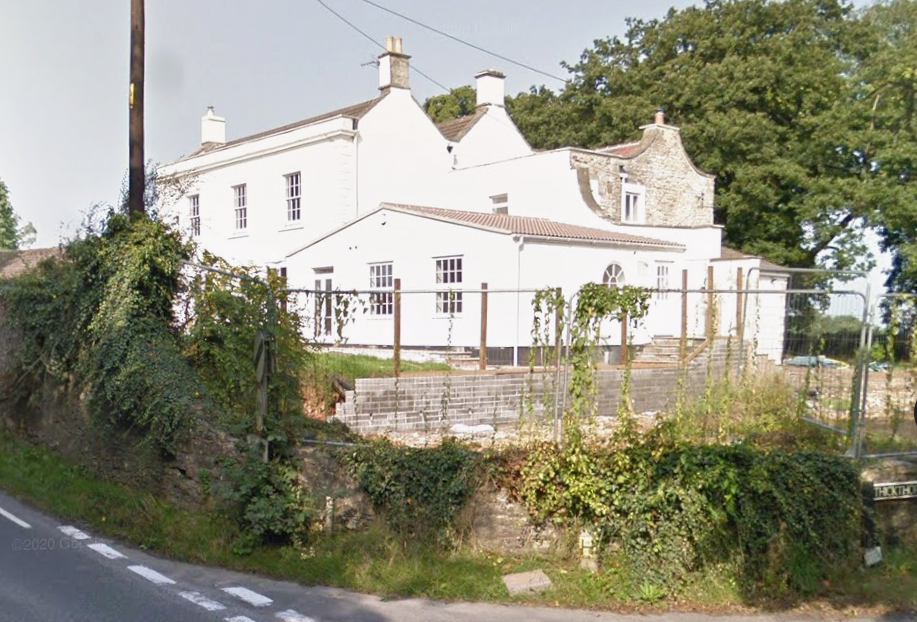
On the rise of Lynch Hill, between Emborough and Chilcompton, stands a house with a quiet presence and a surprisingly tangled identity. Today it is private accommodation, closed to the public and folded back into the landscape. But for decades it was known as The Court Hotel , a place whispered about for its resident ghost — a tall figure in old‑style judicial robes, said to be Judge George Jeffreys, the infamous “Hanging Judge” of the Bloody Assizes. It’s a story that has circulated for years. But when you trace the building’s history, the legend begins to unravel. Linch House: The Building Before the Myth Early maps from the 1800s list the property not as a court, nor as a hotel, but as Linch House . The name comes from the Old English hlinc, meaning a ridge or boundary terrace — a clue that the house stands on land shaped by centuries of agricultural use and early settlement. Somerset is full of “lynch” place‑names marking old field systems and medieval terraces, and Linch House fits neatly into that pattern. This tells us something important: the building began life as a private residence , not a judicial building. Its position on the ridge, overlooking the surrounding lanes, would have made it a desirable spot for a small manor or gentleman’s house. Nothing in its early naming or placement suggests any connection to legal proceedings, assize courts, or the machinery of 17th‑century justice. The 20th‑Century Reinvention: From Linch House to The Court By the time of the 1947 map, the house had adopted a new name: The Court. This kind of renaming was common in the late Victorian and early‑20th‑century period, when rural manor houses often took on grander titles to reflect status, aspiration, or simply fashion. “Court” was a popular choice — it sounded distinguished, landed, and steeped in heritage, even if the building had never hosted a single legal proceeding. This change is the hinge on which the later folklore swings. Once the house became The Court, it became easy — almost inevitable — for people to assume it had once been a court house. And once that assumption took hold, the next step was equally predictable: attaching the name of the West Country’s most notorious judge, George Jeffreys. Judge Jeffreys: A Legend Looking for a Home Jeffreys’ reputation during the Bloody Assizes of 1685 was so severe that his name has become a kind of folkloric shorthand for cruelty. Inns, manor houses, and old buildings across Somerset and Dorset have stories linking him to their walls, often without any historical evidence. In the case of Linch House — later The Court — there is no record of Jeffreys ever visiting the property. His documented circuit passed through Wells, Taunton, Exeter, Dorchester and Salisbury. Emborough and Chilcompton do not appear in any official accounts of the Assizes. The Jeffreys connection here is almost certainly a 20th‑century invention , born from the building’s new name rather than its past. But the haunting itself? That’s a different matter. The Haunting: A Figure on a Familiar Path Witnesses from the hotel era — both staff and guests — describe a tall figure dressed in old‑style clothing, interpreted as judicial robes. He appears in the hallway, walks through what was once the original front door (now sealed), crosses the garden with deliberate purpose, pauses beneath a massive oak tree, and fades away. Even when the apparition doesn’t appear, people have reported the sound of the old front door opening and closing — a door that no longer exists. It’s a quiet, looping haunting. No theatrics. No messages. Just a repeated moment, as though someone is still following a familiar route. And once you remove the Jeffreys myth, the figure becomes far more plausible: a former resident of Linch House, replaying a routine from long before the building was ever called The Court. A Residual Haunting, Not a Judicial One Residual hauntings — those that replay a moment like an echo — often reflect: habitual paths daily routines emotionally charged places long‑term residents The apparition’s behaviour fits this pattern perfectly. He walks a known route, pauses at a known spot, and disappears. Nothing about the haunting suggests a judge delivering verdicts or a figure tied to the Assizes. It feels domestic, not judicial. The “judge” interpretation likely came after the building was renamed The Court, colouring how witnesses described what they saw. What Stands There Today The Court Hotel has long since closed. The building is now believed to be private accommodation, likely converted into flats. The old signage is gone, the car park is quiet, and the house has returned to its original role as a private residence — much like it was when it was still Linch House. Whether the haunting continues is unknown. If the figure is a residual imprint, he may still walk his path regardless of who lives there. If he is something more conscious, perhaps the new residents have seen him — and simply chosen not to share it. A Legend Born From a Name In the end, the haunting of The Court is a story shaped as much by the building’s changing identity as by anything supernatural. A private house becomes The Court, a name invites a legend, and a ghost becomes tied to a judge who never set foot there. Strip away the myth, and what remains is still compelling: a quiet house on a ridge, a figure walking a familiar path, and a story that has grown and shifted with the building itself. Sometimes the truth is simpler. Sometimes the folklore is louder. And sometimes a haunting doesn’t need a famous judge — just a house with a long memory. Images - Google Streetview 2016 Maps - Know your Place - 1888 (Linch House) 1947 (The Court) Articles - British Newspaper Archives  Created by Somerset Paranormal, with AI assistance for writing clarity. All research, structure, and content choices are my own. *UPDATE - On looking through the British Newspaper Archives I have found a few interesting things, Lynch House has been bought and sold quite a few times, as I have found a lot articles of it for sale in different years, it hasn't been in the hands of one family at all, it was let out in 1894, residents include FH Knight, who put in the telephones in 1933, also a Milicent Whitehouse died there in August 1893. There also seems to have been a fire which destroyed the original house in March 1872, see article, when it was the residence of Major Boyle, no one was injured. A Mr S Daniels owned it up to 1948, but it gets its first mention of being a guest house in 1946. Its earliest appearance in the newspapers I can see is in 1838, when it was owned by Mr Green. So to sum up, lots and lots of owners, a fire? just one death recorded, a female and no unusual or interesting events recorded.