The Women Who Haunt Bath: Female Ghosts, Legends & Lost Lives
From the elegant Georgian streets to old Victorian houses, former hospitals and forgotten corners of the city, Bath has accumulated a remarkable collection of stories about women who never quite left.
Some are said to appear in familiar surroundings, others are associated with strange noises, unexplained disturbances or fleeting figures glimpsed in passing.
Their identities are sometimes known, sometimes lost to time, and occasionally little more than a mystery.
Bath is celebrated for its beautiful architecture, fashionable Georgian society and rich history. Yet behind its elegant façades lies a darker collection of tales: women in grey, mysterious servants, spectral brides and frightening apparitions said to linger long after their earthly lives have ended.
Some of these stories are attached to real historical figures, while others survive through local tradition and accounts of unexplained experiences. Their details can vary between tellings, and not every haunting comes with a clear explanation. Nevertheless, together they form a fascinating part of Bath's supernatural folklore.
Here are some of the female ghosts and mysterious women said to haunt Bath and its surrounding neighbourhoods.
The Hauntings of Widcombe
Widcombe Crescent and Widcombe Terrace
Widcombe has two particularly unsettling stories involving female apparitions, each remembered for the fear they supposedly caused among the people living in the houses.
The Terrifying Female Spirit of Widcombe Crescent
One disturbing account tells of a female apparition appearing on the staircase of a house in Widcombe Crescent following a tragic family event.
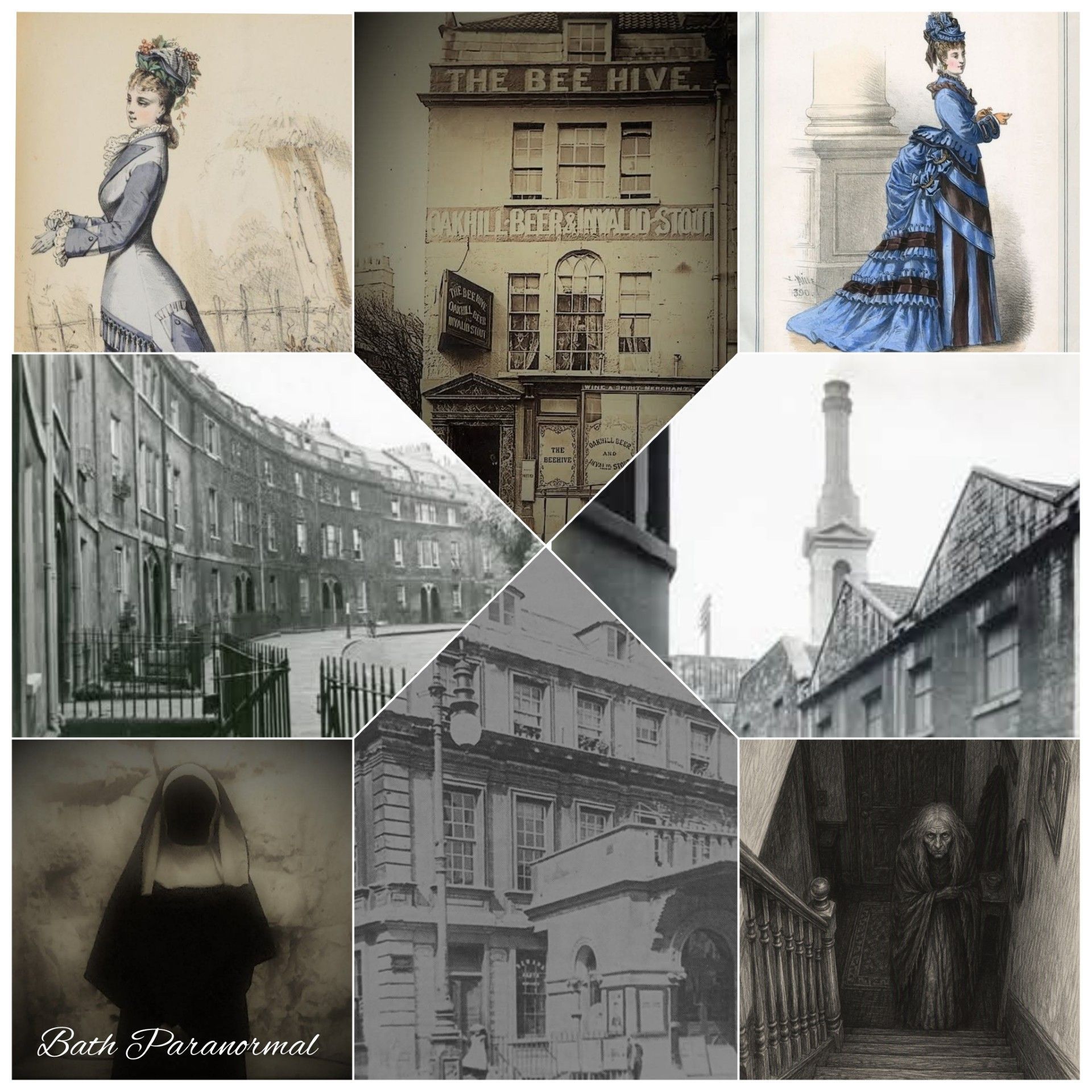
Her expression was described as so full of malice that members of the household became frightened of using the stairs, rushing up them to avoid encountering her.
The family eventually left, and subsequent occupants reportedly struggled to remain in the property. A local priest is said to have moved in to confront the haunting, but the activity allegedly intensified. The story culminates in an attempted exorcism attended by as many as forty priests. What happened during the final confrontation remains part of the tale.
The Elderly Woman of Widcombe Terrace
Another strange haunting is associated with a house on Widcombe Terrace, where two sisters lived together, the younger caring for her bedridden elder sibling.
The younger woman reportedly encountered a frightening elderly figure dressed in old-fashioned servant's clothing. Her lined face was twisted with anger, and after making threatening gestures, the apparition vanished up the stairs. A second, luminous figure was subsequently witnessed by the younger sister and a visiting relative.
The house allegedly acquired a sinister reputation, with domestic servants said to have fled rather than enter certain rooms. The identity of the figures, and the reason for their appearances, remain unexplained.
Women in Grey, Blue and Purple
The Lady in Blue — A Victorian Villa
A beautiful Victorian villa in Bath, surrounded by extensive grounds, reportedly gained a reputation for haunting during the 1930s and 1940s.
The most frequently described apparition was a woman wearing a blue dress and bonnet, with curly hair. Her appearances were fleeting, and witnesses sometimes described her as bending down or dragging something invisible across the floor.
Who she might have been, and what she appeared to be doing, remains a mystery.
The Grey Lady of the Theatre Royal
One of Bath's best-known ghost stories centres on the Theatre Royal Bath and the neighbouring Garrick's Head.
The Grey Lady is traditionally described as an elegant female figure dressed in grey, sometimes associated with a feather in her hair, a smell of jasmine is said to follow her or announce her presence to an unsuspecting person in her vicinity..
Several versions of her story circulate, often involving an actress and a tragic romance.
She is said to appear in the theatre's upper circle and has also been associated with the neighbouring building.
The details of her supposed life and death vary between accounts, making it difficult to separate the original legend from later embellishments. Nevertheless, she remains one of the most enduring figures in Bath's ghostly folklore.
The Woman in Grey — St Martin's Hospital
A female figure dressed in grey is also said to have been seen at St Martin's Hospital in Bath. She has sometimes been described as a nurse who died at the institution.
Little further detail appears to have survived about this particular story, leaving the woman's identity and the circumstances behind the reported haunting uncertain.
The Grey Lady of the Royal Mineral Water Hospital
Another Grey Lady is associated with Bath's former Royal Mineral Water Hospital. She is said to have been a nurse who took her own life within the building, with her ghost subsequently reported there.
The story is a reminder of the many ghost legends attached to Bath's historic medical institutions, where generations of patients and staff experienced illness, suffering and loss.
The Old Lady in Purple — The Grey House, St Catherine's Valley
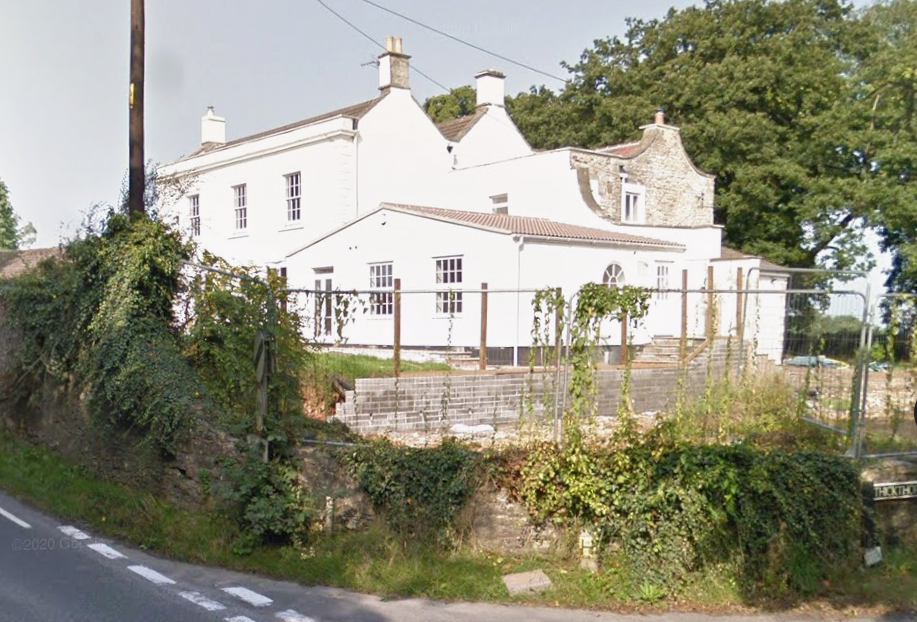
At a private residence known as the Grey House in St Catherine's Valley, near Batheaston, a former female occupant is said to make her presence known to gardeners.
The apparition is described as an elderly woman wearing a purple dress.
According to the account, she seems particularly interested in the garden, a task she apparently preferred to undertake herself during her lifetime.
Perhaps she simply never relinquished her favourite part of the property.
The Misty Lady — Grosvenor Hotel
A female apparition known as the Misty Lady is associated with the Grosvenor Hotel. Reports describe a sudden drop in temperature accompanying her appearance, while unexplained footsteps have also been heard.
Little is known about the identity of this mysterious figure, whose reported presence is marked more by an unsettling atmosphere than by any detailed description.
The Old-Fashioned Lady — Grosvenor Place
At Grosvenor Place, a husband and wife reportedly witnessed a strange female figure silently drifting through their living room. The apparition was described as monochrome, almost as though she belonged to an old photograph.
The sight frightened the couple's cat, and further reports suggested that the same figure had subsequently been seen on the staircase.
Who the woman might have been, and why she appeared in this unusual form, remains unknown.
Brides, Actresses and Unfortunate Women
The Women of Queen Square
Queen Square is associated with stories of a ghostly bride, sometimes called Julia, who is said to wander the area following a tragic romantic disappointment.
In the familiar version of the tale, the young woman was jilted by her intended husband and threw herself from a window. Her ghost is then said to linger around the square, forever associated with the heartbreak that supposedly led to her death.
However, there appears to be little historical evidence to substantiate Julia's story as it is usually told.
There is a separate historical account concerning a young woman known as Sylvia, whose real name was Fanny Braddock. She reportedly died by suicide in September 1731 at the home of John Wood. Accounts of her death describe her wearing white clothing intended to resemble a bride.
Could these two stories have become intertwined over time? It is an intriguing possibility, although the connection remains unproven.
Miss Hunt and the Elizabethan Costume
A former wedding dress shop in Northgate Street was reportedly haunted by a female spirit known as Miss Hunt. She was believed to have taken her own life in a neighbouring building and was said to make her presence known after closing time, opening doors and switching lights on and off.
Around 1978, staff displayed an elaborate Elizabethan costume made for a local drama society. According to the story, the haunting intensified, with Miss Hunt repeatedly appearing and disappearing around the dress. An unpleasant, damp smell reportedly filled the shop.
The costume was eventually removed from the window, after which the strange activity and smell were said to have stopped. Whether the events were connected, or simply a curious coincidence, remains part of the story.
The White Lady of the Francis Hotel
The Francis Hotel occupies several of the Georgian townhouses on the south side of Queen Square. It is also associated with a female ghost, often described as a former housekeeper who died by hanging.
Guests have reportedly experienced unexplained scratching and tapping noises in their rooms. One account even describes a hot-water bottle being flung from a table by an unseen force.
The identity of the woman is not always consistent across versions of the story, but the hotel remains associated with this unsettling female presence
The Woman in Grey at the Circus
The elegant Georgian houses of the Circus have their own reported supernatural history. One residence is said to have experienced poltergeist-like disturbances, alongside the apparition of an elderly woman in a long dress.
She was reportedly seen sitting quietly beside the fire, as though occupying her accustomed place in the room. Unlike the more frightening figures in Bath's ghost stories, this woman appears to have been a silent, passive presence.
There is little further information about her identity or the circumstances surrounding the sighting.
Servants, Sisters and Mysterious Figures
Bunty — The Beehive
A female ghost known as Bunty is associated with the former Beehive public house on Lansdown Road, now known as Grappa's Bar.
She is said to have been a Victorian worker connected with the establishment and has reportedly appeared in hallways and bedrooms, wearing a blue-grey gown or servant's clothing. Unlike some of Bath's more frightening apparitions, Bunty is described as a peaceful figure, seemingly going about her ordinary duties.
Her story is one of a woman whose working life may, according to local legend, have continued long after her death.
The Silk Ladies of the Ballastrade
For many years, Bath Theatrical Costume Hire occupied premises at 2 The Ballastrade on London Road. It was here that reports emerged of a particularly unusual haunting, attributed to mysterious figures who became known as the Silk Ladies.
The owner reportedly sat sewing on a balcony and heard the unmistakable swish of silk skirts moving up the stairs. Women's voices and the clinking of crockery could also be heard, as though an elegant gathering were taking place just out of sight.
Later historical research by myself uncovered a possible connection with two sisters, Marian and Alice Patmore, who lived at the premises between 1927 and 1935. Marian worked as a milliner and dressmaker, and both women had connections with clothing and needlework.
Could the mysterious Silk Ladies have been connected with the sisters?
There is no way to establish this, but the coincidence makes for a fascinating addition to the story.
Juliana Popjoy — Beau Nash's House
Juliana Popjoy, who lived from approximately 1710 to 1777, is remembered as the last mistress of the celebrated Bath social figure Beau Nash.
Her ghost is said to haunt the building associated with their relationship, now occupied by a restaurant. Diners have reportedly seen a woman appear in an upstairs room before vanishing in front of them. Some versions of the story suggest that Juliana can also take on the appearance of a frightening, wizened old woman.
A second female apparition is associated with the building: a woman dressed in 1960s clothing who reportedly appears perfectly ordinary until she suddenly disappears.
The two figures make for an unusual combination of Georgian history and a much more modern ghost story.
The Nun of Larkhall Place
At a house in Larkhall Place, a resident reportedly encountered the apparition of a nun dressed in black on several occasions.
The figure's face was indistinct, appearing as little more than a blur. The sightings were also said to be accompanied by a repulsive, musty smell.
On other occasions, the resident heard their name being called when nobody else was in the house.
The identity of the mysterious nun remains unknown, and the reason for her reported presence has never been established.
The Lady in the Mac — Combe Down
A woman identified as Mrs Phillips reportedly encountered a mysterious female figure repeatedly over a period of around eighteen months in the Combe Down area.
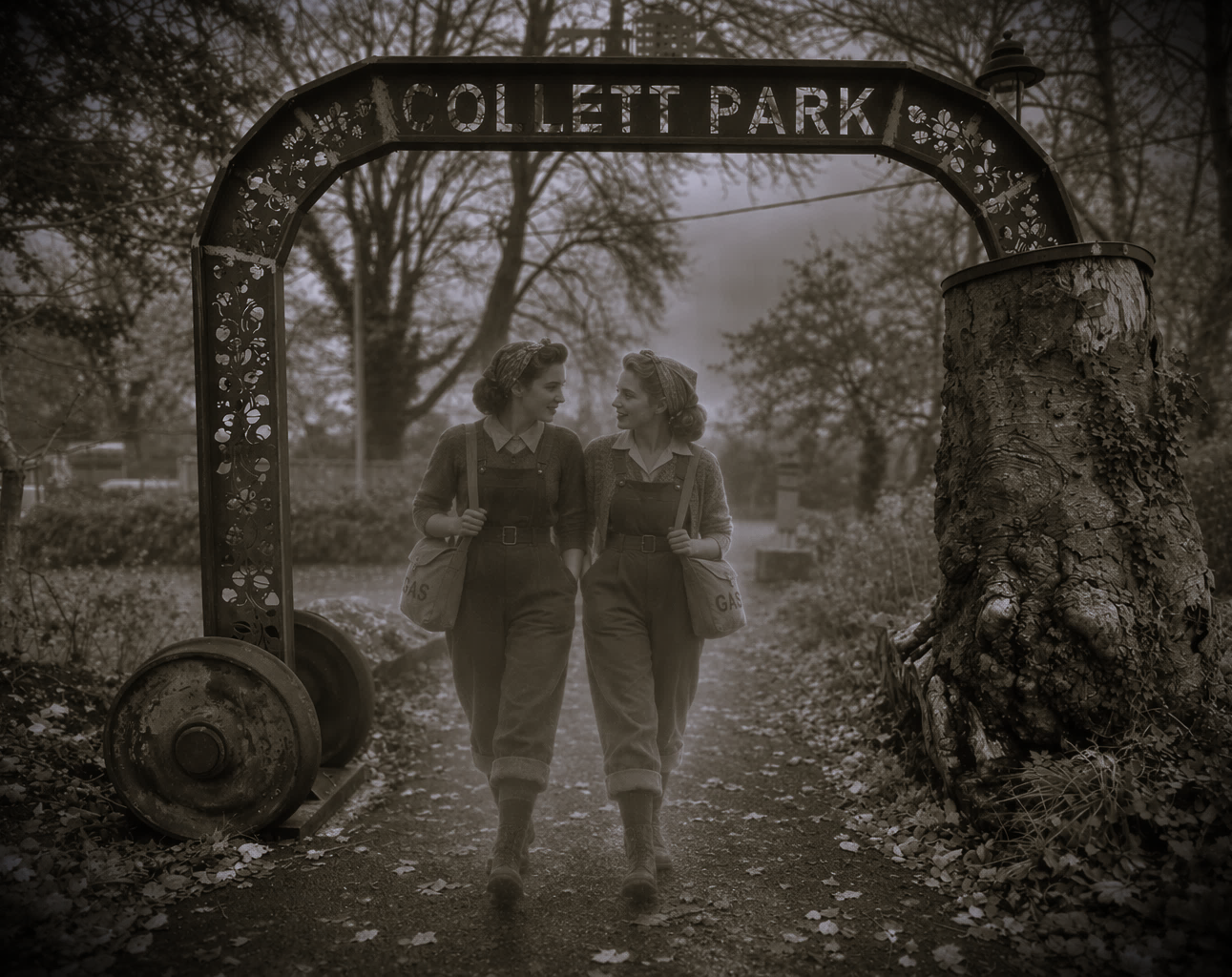
The apparition appeared between a quarry and a field, looking solid rather than transparent. She was always described as wearing the same mackintosh and beret and carrying a canvas bag. Despite repeated encounters, she never spoke or acknowledged Mrs Phillips.
The witness wondered whether the woman might have had some connection with the quarry, but no explanation for the sightings appears to have emerged.
A Ghostly Girl and Other Unexplained Women
The Ghost Girl of Swallow Street
A young girl's apparition is said to have been seen around the Old Boiler House associated with the former Victorian Bath Laundry in Swallow Street.
Local accounts suggest that the girl may have been the victim of a murder connected with the site.
However, I have not found sufficient evidence to establish that this supposed crime took place, so the circumstances behind the story remain uncertain.
The Female Spirit of the Raven
The Raven public house is associated with an entity known as George, who is said to haunt the cellar near an old well.
What makes this story unusual is the claim that George can take a female form. Little else is known about the apparition, and the identity of this mysterious presence remains unclear.
The Older Lady of the Green Park Tavern
A more recent report concerns the upper part of the former Green Park Tavern, now Magu.
According to a witness account recorded by the Paranormal Database, a member of staff encountered an older female apparition while going upstairs to move stock. The encounter reportedly frightened the witness enough to make them retreat quickly.
Bath
Unlike the better-known legends attached to Bath's historic buildings, this is a relatively modern report, with little information about the woman's identity or history.
Lastly, Bath's most famous haunting - Sally-in-the-Wood — The Mysterious Woman of the Road
South of Bath, near Bathford, lies the area known as Sally-in-the-Wood, a place surrounded by local folklore and stories of unexplained events.
Several explanations have been offered for the name, including a tale of a mysterious woman who supposedly lived in the area in the early nineteenth century.
Other accounts associate the location with ghostly sightings and unexplained accidents on the road.
The identity of Sally, if she was a real person, remains uncertain.
Whether the name preserves the memory of an actual woman or grew from local storytelling is difficult to establish, but the mystery has become part of the area's folklore.
The Women Who Remain
Bath's female ghost stories are as varied as the city's history.
Some tell of tragic romances and women remembered by name; others describe servants, nurses, elderly residents and mysterious strangers whose identities have long since been forgotten.
There are frightening apparitions said to have driven people from their homes, quiet figures apparently continuing their daily routines, and unexplained voices or footsteps suggesting that someone might still be present when nobody can be seen.
Of course, these are stories, reported experiences and local traditions, not proof that the dead remain among us. Some have changed through generations of retelling, while others survive only as brief accounts with little surviving detail.
Yet perhaps that is part of their enduring appeal.
Behind every reported apparition lies a question: who was she, what happened to her, and why has her story endured?
In a city as old as Bath, with its beautiful streets and centuries of human history, it is easy to understand why such tales continue to capture the imagination.
And perhaps, somewhere behind one of those Georgian windows or along a quiet old passage, the women of Bath's ghost stories are still waiting to be remembered.
These are only brief versions of the stories, each haunting has its own individual listing, blog post or longer Substack publication, where you can read the full story and, where possible, the history and research behind the legend.
Happy Halloween !
Penni Wallace
Sources - Bath Paranormal
Haunted Bath - David Brandon, Paranormal Somerset - Selena Wright, Paranormal Bath - Malcolm Cady, Paranormal Database & Local Sources