Wassailing the Trees - A Somerset Tradition
Wassailing the Trees
Wassailing is an ancient custom believed to have its origins in Anglo-Saxon England.
The word itself derives from a phrase meaning “be in good health.” Over time, the tradition developed along two distinct but related paths.
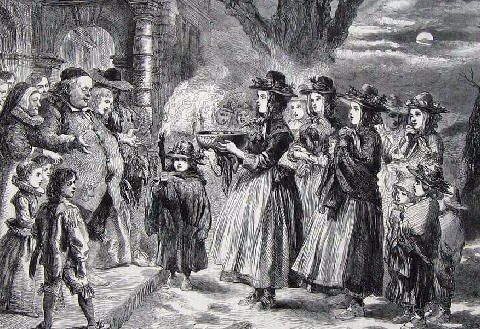
The first form of wassailing involved visiting homes with a communal bowl of spiced drink.
Revellers would knock at doors, offering seasonal good wishes in exchange for food, drink, or small gifts.
This custom became particularly associated with Christmastide and was a way for households to share goodwill and prosperity for the coming year.
In medieval England, wassailing visits also provided an opportunity for the lord of the manor to show gratitude to his tenants for their labour. Those who went from house to house often entertained families with music and dancing, commonly accompanied by an accordion.
Refusing to offer hospitality to wassailers was considered risky, as it was believed a curse might be placed upon the household.
Much like modern reactions to carol singers, opinions on wassailing varied.
Some people regarded it as vulgar or disruptive—an excuse for rowdy behaviour and demands upon wealthier neighbours.
By the 12th century, this strand of wassailing was gradually replaced by the more Christianised tradition of carol singing, which emphasised religious songs and the collection of alms for the poor. This adaptation made the practice more acceptable to both the Church and higher levels of society.
The second strand of wassailing was rooted firmly in the countryside and focused on giving thanks to cider-bearing apple orchards.
This tradition was especially strong in the West Country, and most notably in Somerset, long regarded as England’s cider heartland.
Before 1752, dates in Britain were governed by the Julian calendar. When the country adopted the Gregorian calendar to align more accurately with the solar year, eleven days were removed.
Despite this official change, many rural communities continued to observe longstanding customs according to the old calendar.
As a result, the 17th of January became the most common date for orchard wassailing.
This form of wassailing is believed to have pagan origins.
Alongside expressions of gratitude for past harvests, the rituals were intended to drive away evil spirits and ensure fertility for the year ahead. Proceedings typically began around 7 p.m.
A bonfire would be lit within the orchard, and the orchard owner would provide a wooden goblet of hot, spiced cider.
This wassail drink often contained roasted apples bobbing among pieces of toast and spices.
The revellers gathered around the oldest apple tree in the orchard, which was believed to pass its fertility to the younger trees.
A circle was formed, and the appointed Queen of the wassail was lifted into the tree’s branches to lead a ceremonial toast.
Singing, dancing, drumming, and general merriment followed.
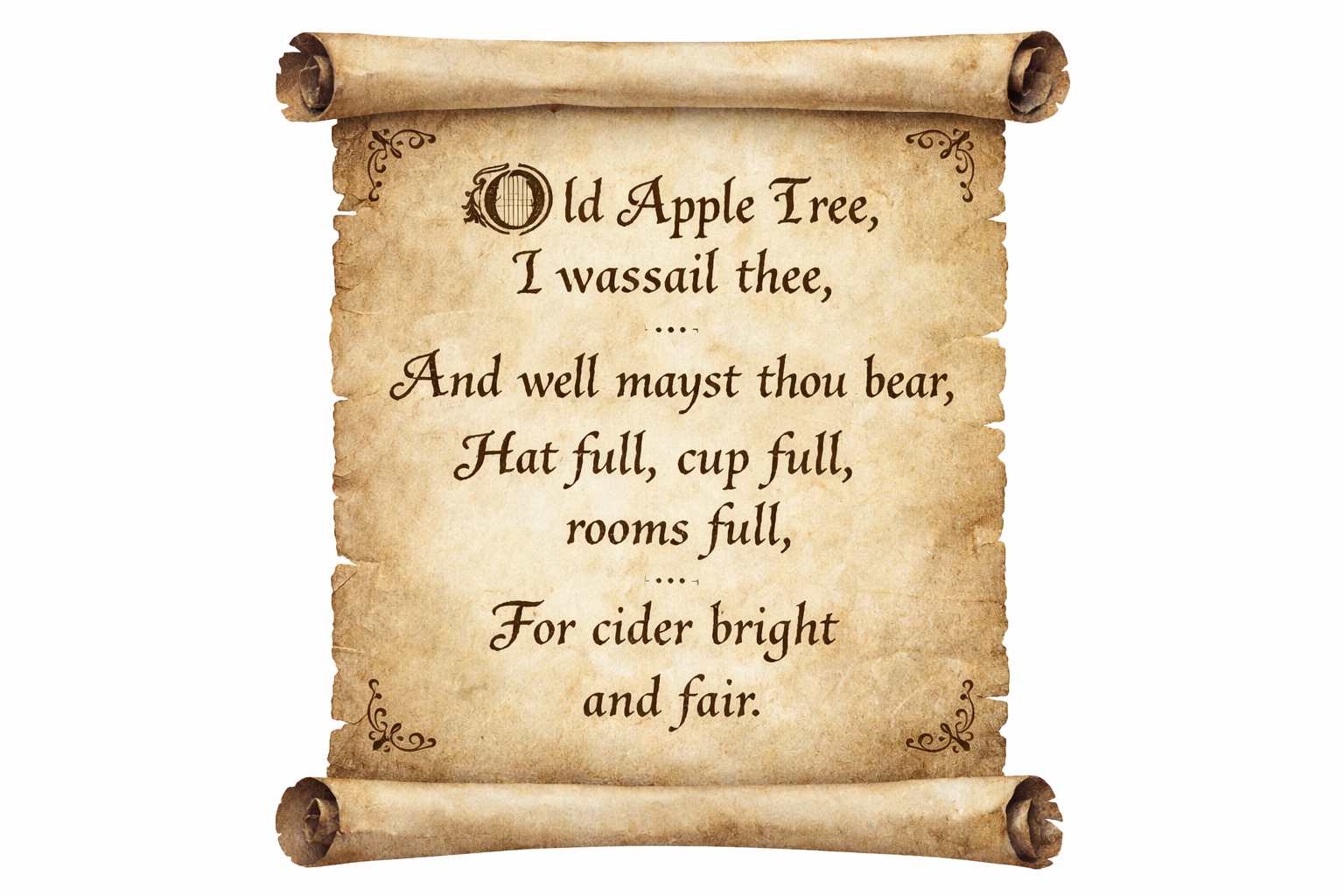
Together, the gathered crowd would sing:
Old Apple Tree, I wassail thee,
And well mayst thou bear,
Hat full, cup full, rooms full,
For cider bright and fair.
Cider was then poured around the tree’s roots and thrown into its branches as an offering of thanks and encouragement for a plentiful harvest.
The soaked pieces of toast were placed among the roots as gifts for the robins.
Once the Queen had safely returned to the ground, the men would fire shots up through the branches to frighten away any lingering evil spirits.
At the height of the tradition, this celebration could continue late into the night, with multiple local orchards visited and honoured in turn.
Wassailing has not disappeared entirely.
The custom is still observed in parts of Somerset today. In Curry Rivel, the celebration takes place on the 5th of January and includes the burning of the ashen faggot, while Carhampton continues to observe the tradition on the old-calendar date of the 17th of January.
More local wassailing events are now at Kilmersdon and Coleford.
Images - lumix2004 - Pixabay , Google, PJW Artworks