Bath’s Forgotten Corner: The Eerie Legend of No. 1 Orange Grove
Bath’s Forgotten Corner: The Eerie Legend of No. 1 Orange Grove
History -
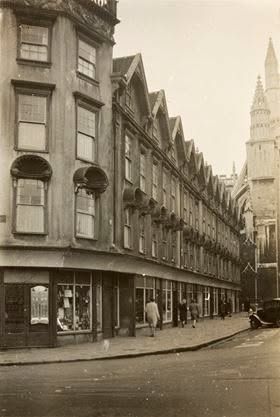
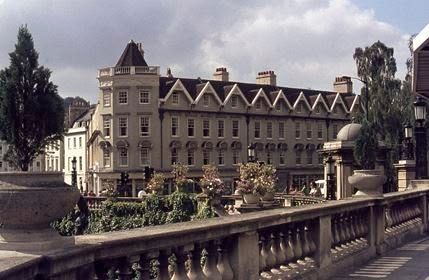
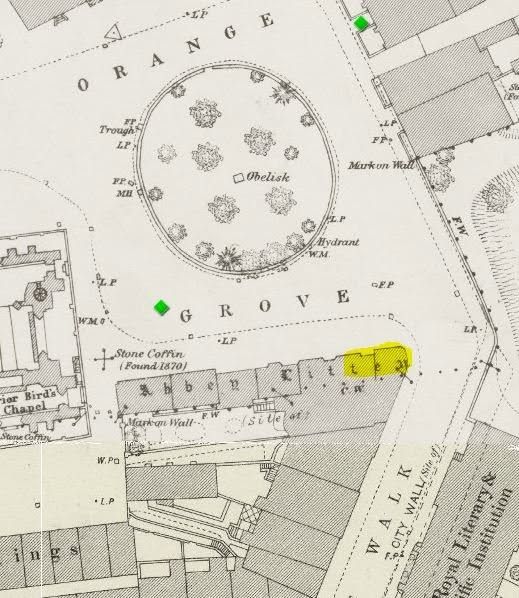
Nos. 1–7 Orange Grove were built between 1705 and 1708 on former Priory churchyard land which was gardens and an orchard beside Bath Abbey, forming one of the city’s earliest commercial terraces.
By the 1730s the row already had its distinctive multi‑gabled frontage, facing the fashionable promenade where visitors gathered beneath the 1734 obelisk honouring the Prince of Orange.
The shops became part of a lively Georgian hub of busy shops, including a perfumier and Mr Bulls toy shop.
In 1897 the architect C.E. Davis refaced the terrace, regularising the gables and rebuilding the corner turret, giving the buildings the striking fairy‑tale silhouette seen today.
Behind the neat frontage, the structures remain largely 18th‑century — old cellars, thick walls and uneven floors that have held centuries of Bath’s social life and gossip!
The Haunting of No 1
No. 1 Orange Grove is one of the locations frequently highlighted on Bath’s ghost walks, mainly because of its long‑standing reputation for feeling cold, still and unnervingly oppressive, especially on the top floor.
Over the years, people have claimed experiences of being pushed or having objects thrown or moved, which is why the tours describe it as a site of poltergeist‑style activity.
These reports are impossible to verify and are almost certainly exaggerated for dramatic effect, but the building’s uneasy atmosphere has been talked about locally for a long time.
Today No. 1 stands empty, previously an Antiques shop, owned by an elderly landlord, where the rooms lay untouched, adding to the sense of a place suspended in time.
Whether the stories grew from genuine experiences or simply from the mood of an old, unused 18th‑century building, No. 1 remains the address most associated with Orange Grove’s darker folklore.
Facts and Thoughts -
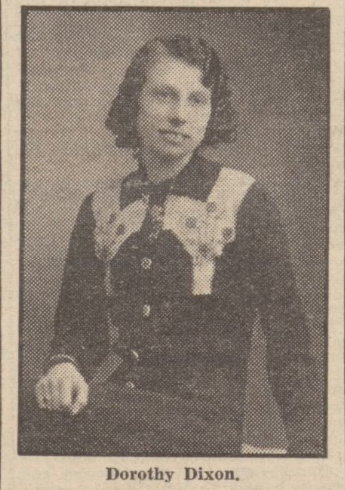
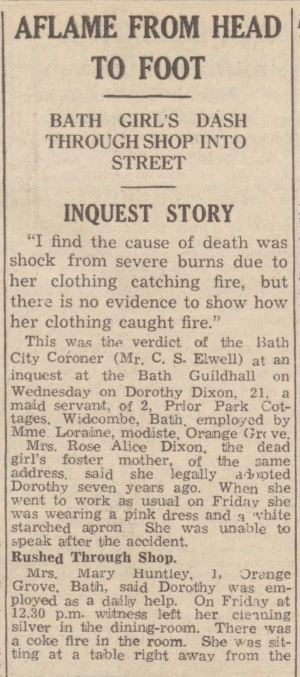
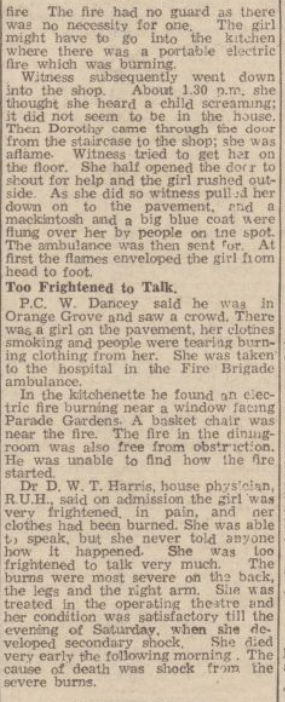
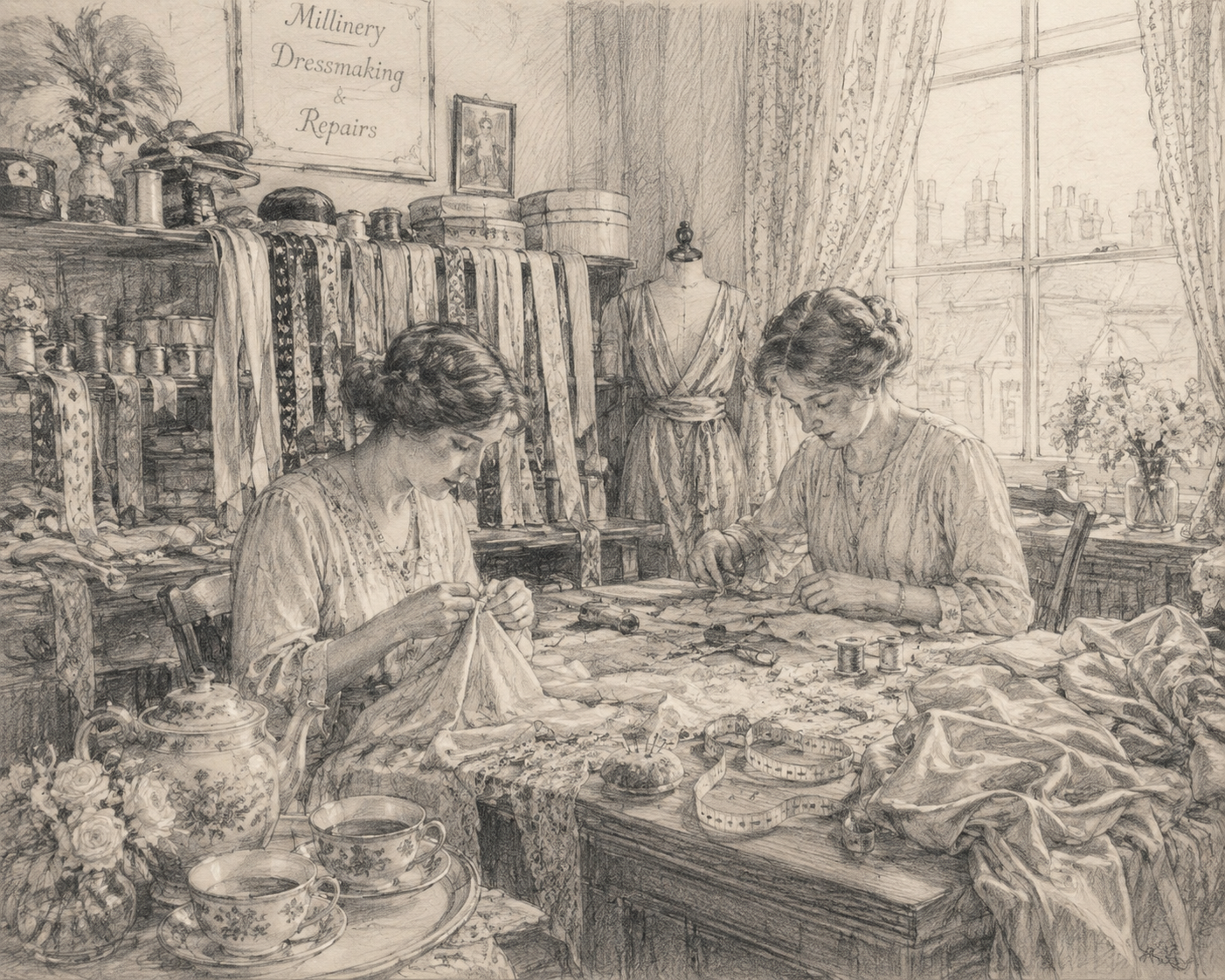
There are mentions of a fire and children perishing, but on researching the address, I have found that there was indeed a small fire, in 1940, but no children perished, just a young maid, who somehow set herself on fire in one of the rooms above at that time a dressmakers and later died in hospital, see the full story below images
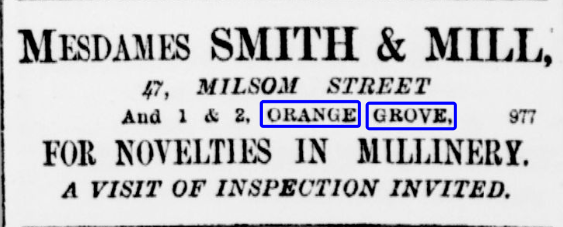
No 1 has been a county court office in 1852, a milliners in 1900 and for 30 years or so John Collins was a tobacconist there.
I would love to hear from any eye witnesses to paranormal activity in this building, also is there anything reported for the other 6 buildings in the terrace?
Real Life at No 1
Sources - Google Streetview 2015
Bath in Time 1945, View over to Orange Grove - 1979, credit - Frank Newport
Know Your Place maps
A Real Life Story for No 1
Bath Weekly Chronicle & Herald - Saturday November 23rd 1940
A terrible accident occurred at 1 Orange Grove, Bath, when Dorothy, a young girl employed as a daily help by Mrs Mary Huntley, suffered severe burns after her clothing caught fire.
On Friday afternoon, Mrs Huntley left the house at around 12.30 p.m., leaving Dorothy cleaning the silver in the dining room.
A coke fire was burning in the room, some distance away from the table where she was working.
At about 1.30 p.m., a witness passing the house heard the screams of a child.
Looking towards the building, she saw Dorothy coming down the staircase in flames.
The girl tried desperately to escape.
She half-opened the front door, but it swung shut again, and she fell to the pavement outside.
People immediately rushed to help her, throwing a blue coat over her in an attempt to put out the flames.
Police Constable W. Dance, who was in Orange Grove, saw a crowd gathering and found the girl lying on the pavement.
She was taken by ambulance to hospital.
Inside the house, it was reported that the fire had no guard. In the kitchenette, near the fire, there was a frying pan and a basket chair was also close to the flames.
Dr W. T. Harris later described Dorothy's terrible injuries.
She had suffered severe burns to much of her body, including her arms, legs and back.
Although she was able to speak, she was unable to explain how the accident had happened.
Doctors operated on her, and her condition remained satisfactory until the Saturday evening, when she developed secondary shock. Tragically, she died very early the following morning, at the Royal United Hospital on 17th November 1940.
The cause of death was given as shock resulting from severe burns.
She is buried in a plot with her parents at Locksbrook Cemetery.