The Silk Ladies of the Ballastrade
The Silk Ladies of the Ballastrade
There are some ghost stories where the history of a building seems almost as intriguing as the haunting itself.
This is one of them.
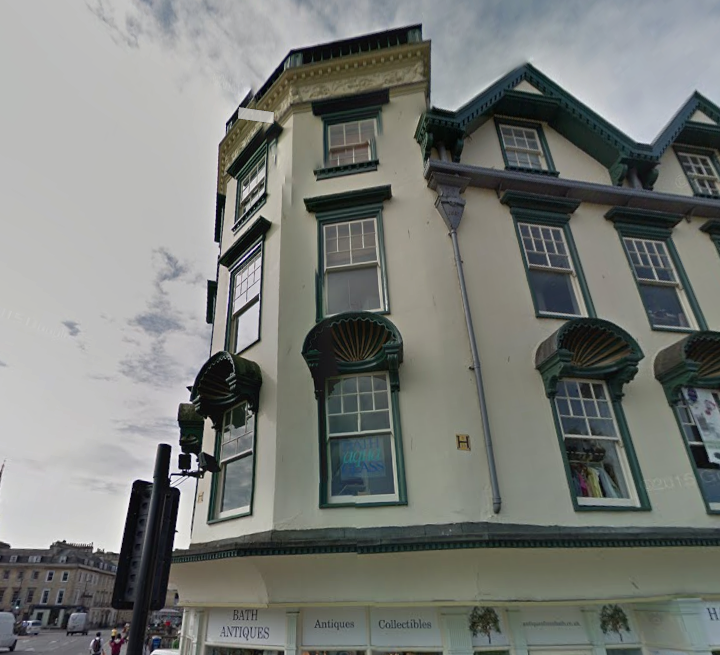
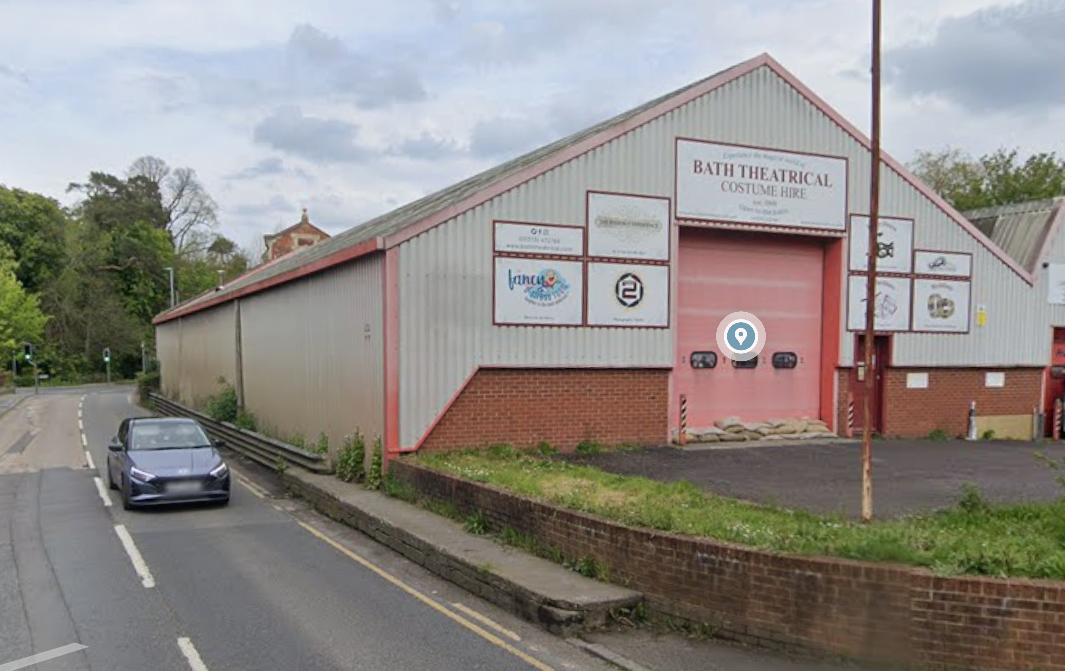
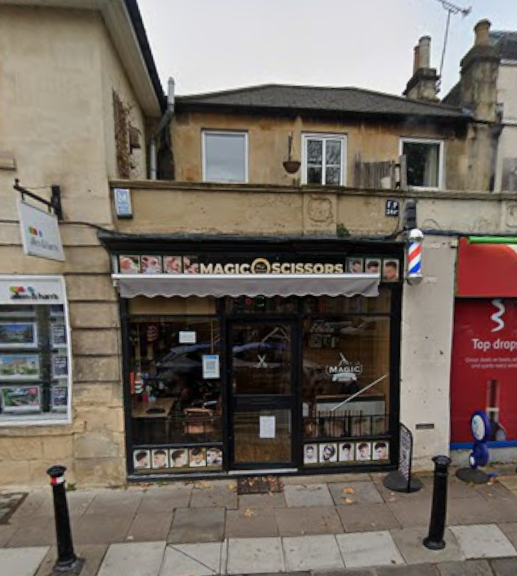
For many years, Bath Theatrical Costume Hire occupied a small premises at 2 The Ballastrade, London Road, Bath, and according to those connected with the business, it was here that a particularly unusual haunting began.
They became known as the Silk Ladies.
While working at the Ballastrade, the owner would sit on the balcony sewing.
From there came reports of sounds that were difficult to explain — the unmistakable swish of silk skirts moving up the stairs, the gentle sound of women's conversation and the clinking of crockery coming from the kitchen.
It was almost as though an elegant gathering was taking place somewhere just out of sight.
The name “Silk Ladies” seems particularly fitting.
But recent research into the history of the building by myself has uncovered a remarkable connection.
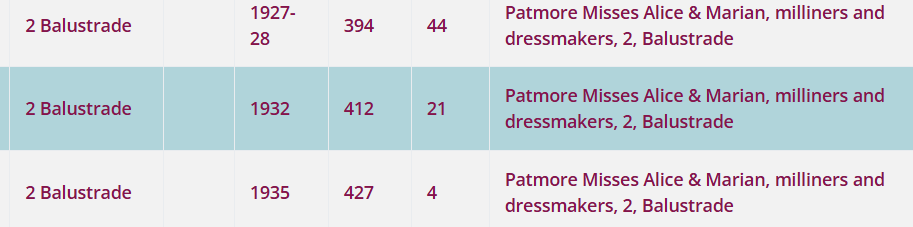
Two women, sisters lived at the Ballastrade between 1927 and 1935, and both were involved in the world of clothing and needlework.
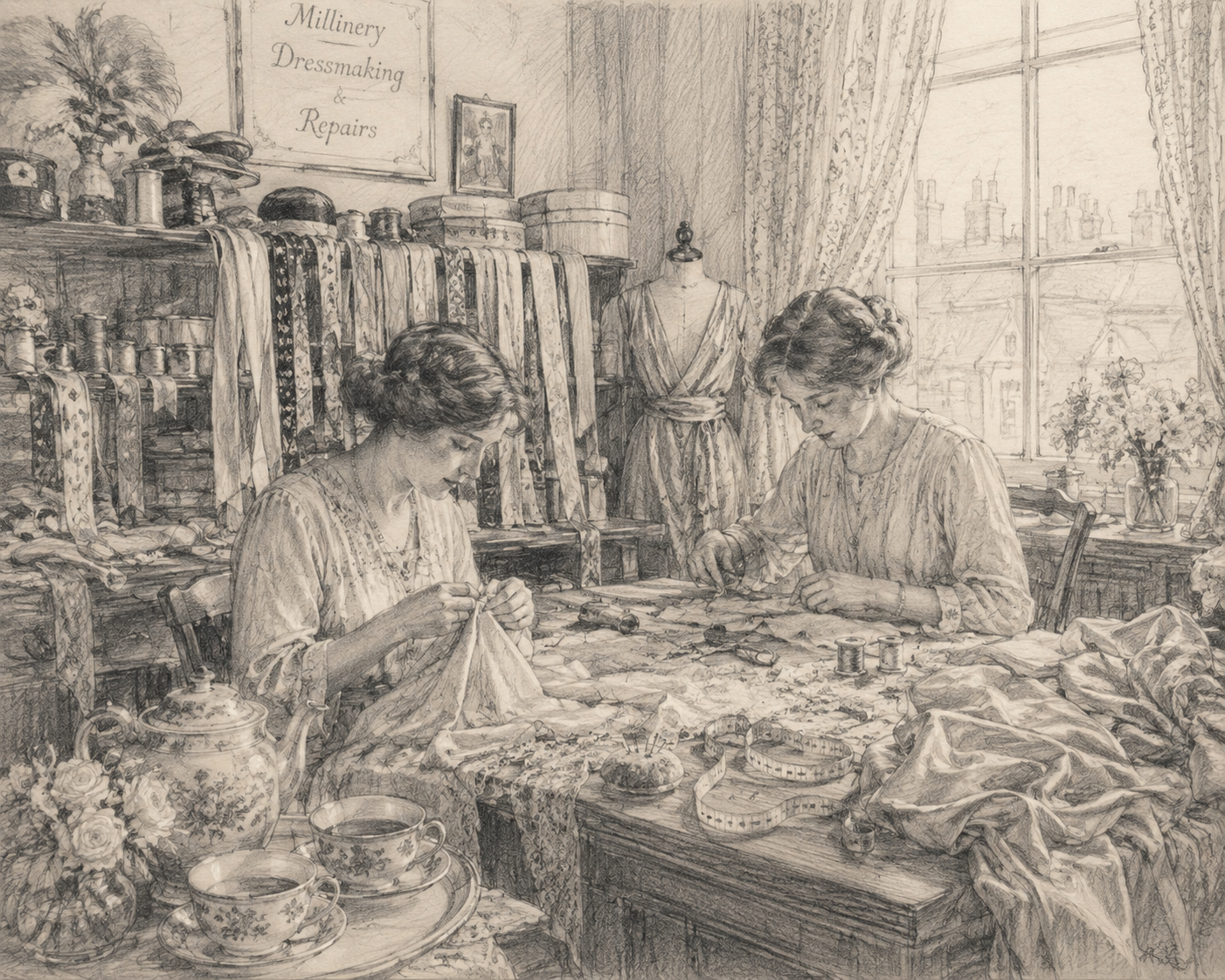
One of them was Marian Patmore, a milliner and dressmaker who was far more than simply a woman working from home.
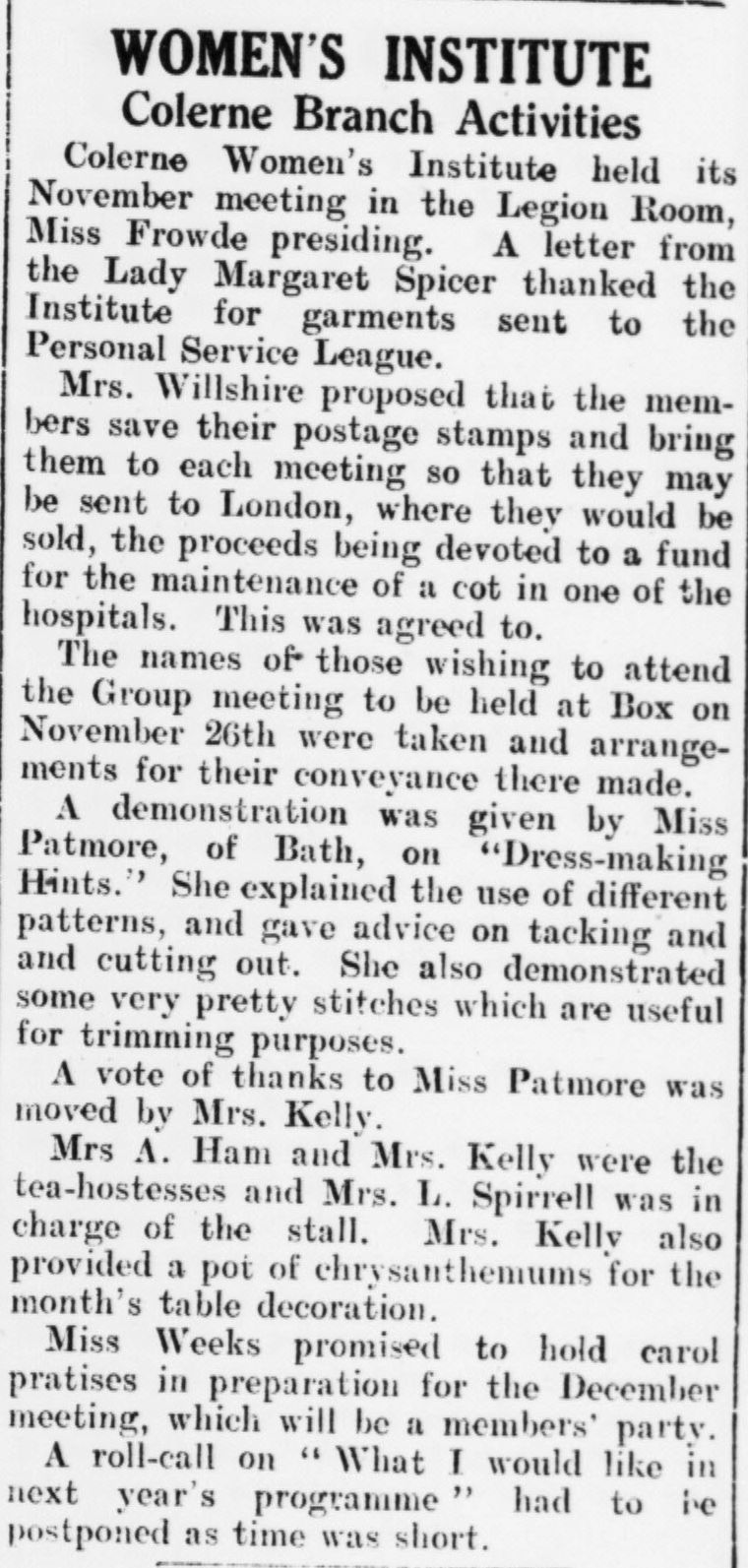
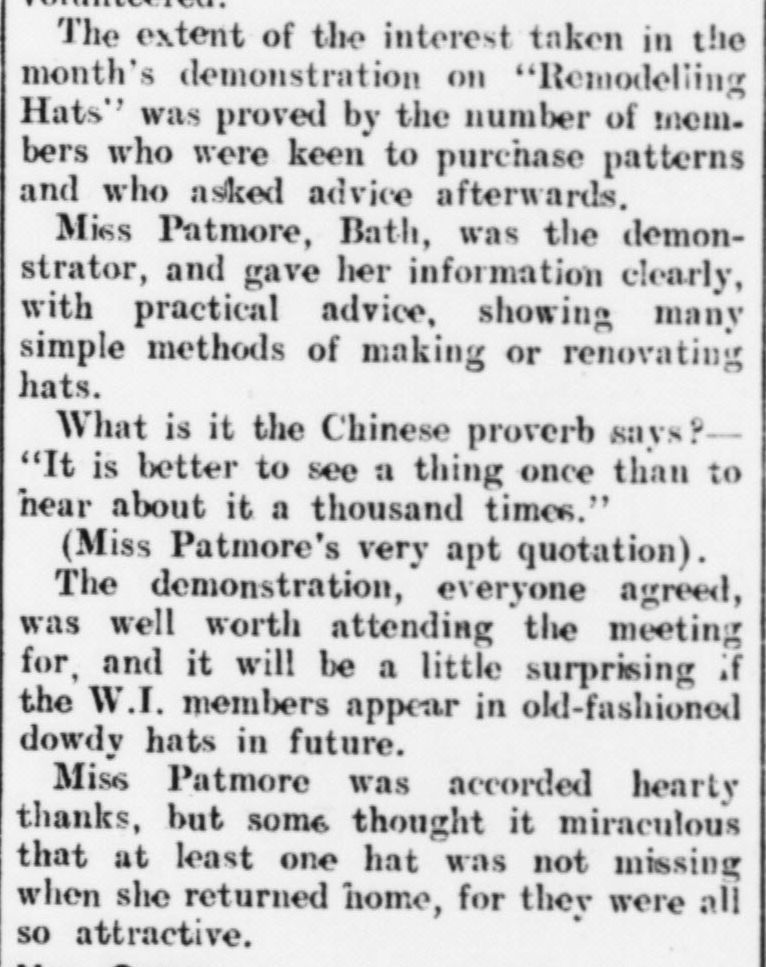
Marian travelled around the counties giving demonstrations to Women's Institutes, sharing her knowledge of millinery and dressmaking, as well as teaching women about household budgeting and making the most of what they had.
One of the sisters was also possibly a member of the Bath Avon Shakespeareans and Bath Players, a theatre group, which also ties in nicely to the premises later being a theatrical costume shop..
It paints a fascinating picture of the women who once lived at the Ballastrade — women working with fabrics, clothing and fashion, passing their skills on to others and travelling throughout the surrounding counties to demonstrate their craft.
And decades later, the same premises became home to a theatrical costume business, once again filled with hats, dresses, fabrics and clothing from another era.
Could Marian Patmore and her sister Alice, be the mysterious “Silk Ladies”?
There is, of course, no way to prove that the reported paranormal activity is connected to either woman.
But the coincidence is difficult to ignore.
The reported phenomena are remarkably specific: the sound of women's voices, crockery, and the unmistakable sensation of silk skirts swishing past. And the two women who lived there during the 1920s and 1930s were themselves deeply involved in millinery and dressmaking.
Perhaps they simply loved their work — and never quite left it behind.
From Bath to Frome
In 2001, Bath Theatrical Costume Hire moved from the Ballastrade to Unit 8 at Wallbridge Industrial Estate in Frome, a building with its own long industrial history.
And intriguingly, the reports of unexplained activity didn't necessarily end with the move.
At the Frome premises, staff have reported the presence of a male figure known as James. There have been reports of the smell of cigarette smoke when nobody nearby is smoking, while keys and items of clothing have apparently disappeared and later turned up in obvious places.
Staff have also reported seeing a man standing beside a particular clothing rail, only for him to disappear when approached.
James has sometimes been suggested to be a Second World War airman, perhaps connected in some way with one of the military uniforms within the collection.
But what about the Silk Ladies?
Could they have somehow followed the costume business from Bath to Frome?
Or is the Frome activity entirely separate?
Perhaps the most intriguing part of the story is that the original haunting has a very real historical setting.
We now know that two women connected with millinery and dressmaking actually lived at the Ballastrade during the period before the costume business arrived.
Whether Marian & Alice Patmore were the women behind the mysterious voices and swishing fabrics is impossible to say.
But next time someone mentions the Silk Ladies of the Ballastrade, it is worth remembering that there really were women there who spent their lives surrounded by fabric, fashion, sewing and hats.
And perhaps, just perhaps, one of them still has a little unfinished sewing to do.
A personal connection
This story has a particular interest for me. I am a milliner and hat maker myself, so discovering that one of the women associated with the Ballastrade was a milliner and dressmaker makes this little piece of Bath's history especially fascinating to me.
The thought that someone who spent her life making hats and clothing may still be connected, in some mysterious way, with a building that later became a costume business is rather wonderful — particularly when I spend my own days surrounded by feathers, fabrics, veiling, hats and all the things that perhaps once filled Marian Patmore's world too.
Have you ever experienced anything unusual at 2 The Ballastrade, London Road, Bath — either while Bath Theatrical Costume Hire was there or since it moved away?
I'd be particularly interested to hear from anyone who has worked in, lived in or visited the building and experienced anything that could shed more light on the story of the Silk Ladies.
© P Wallace/ Bath Paranormal
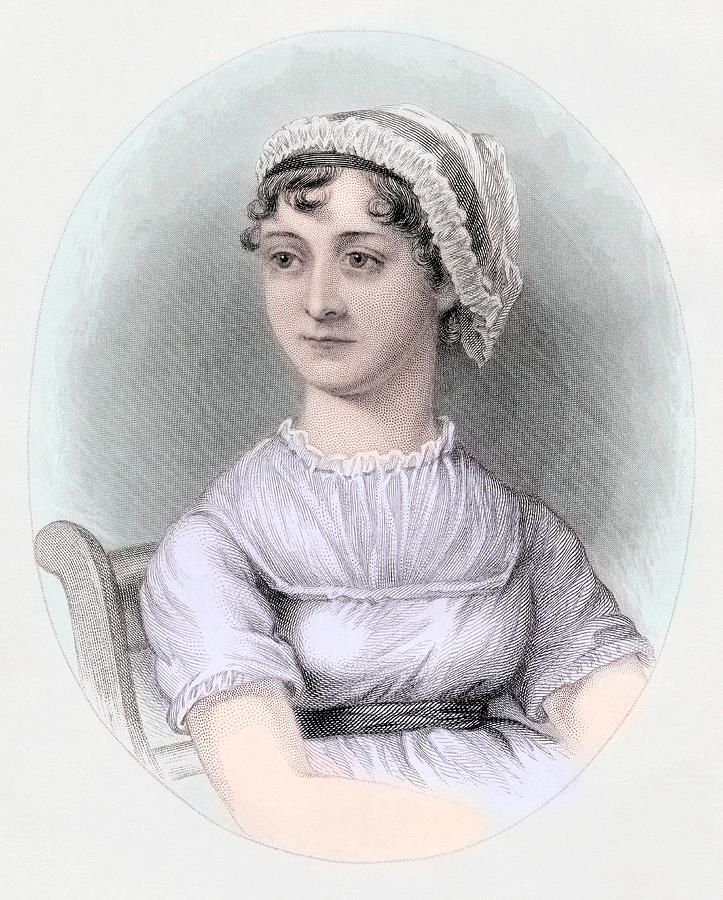
Image - PJW Artworks
Additional Info (ongoing) - On looking through the newspaper archives I have found that Miss M Patmore ( Marian) was a very popular figure amongst the WI in Somerset and Wiltshire, travelling as far as Weston Super Mare to give talks and demonstrations up to 1947.
In 1946 Marian was also a craftwork instructor for girls at Bath Technical College.
So far I have no further details on where they lived, or what happened to Alice or anything about when or where they died, sadly the Bath Burial Records are no longer as easy to search as they once were..
Update - 19/8/26
With a little more digging and help from my Dad and his Ancestry account, I have found out the details on the passing of both sisters-
Alice Mary Patmore died 7th August 1967 at Roundway Hospital, Devizes.(mental hospital)
Marian Gladys Patmore died 31st August 1977, residing at Greystones, Hayesfield Park - Bath (an elderly peoples home)
Both cremated, hence why I couldn't find any burial records.
The owners Grandmother moved into the building in 1969, so depending on what year this was that she heard the activity or whether it was over time, it may have been Alice, but Marian didn't pass until 8 years later, sadly we will probably never know a timeline to tie down the activity.
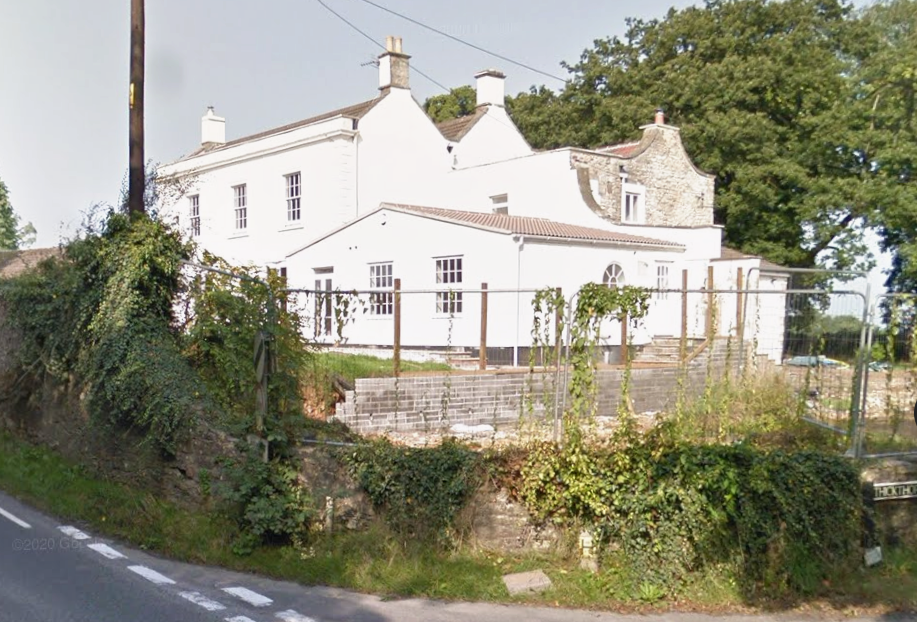
Regarding the building at Balastrade - No. 1 Balustrade (next door) is a former tollhouse, later a shop, and now offices, located at the left end of a terrace.
It was built around 1820-1830 and has been altered in the 20th century.
I cant find details for 2-4, only 5,6,7
The main road at the front of the building was also the Roman Road (Fosse Way)
There is one other female listed at the address, a Mrs JP Low that ran a tobacconist in 1911.
Note - This article is based on my own research and the time spent bringing together historical records, sources and information from various places.
Please do not copy or republish my research, wording or findings as your own, including for videos, social media or other publications.
You are welcome to share the article, but if you use information from my research, please credit this article and provide a link back to the original post.
Thank you for respecting the work that goes into researching and sharing these stories.
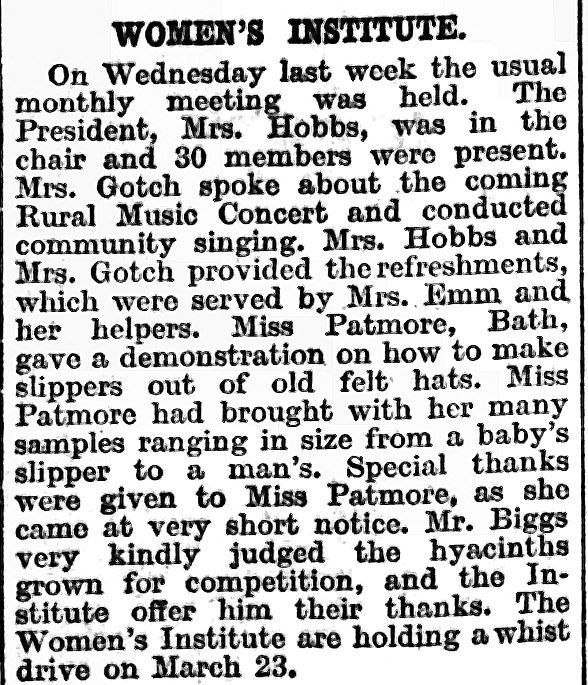
Wiltshire News - 1934-02-23
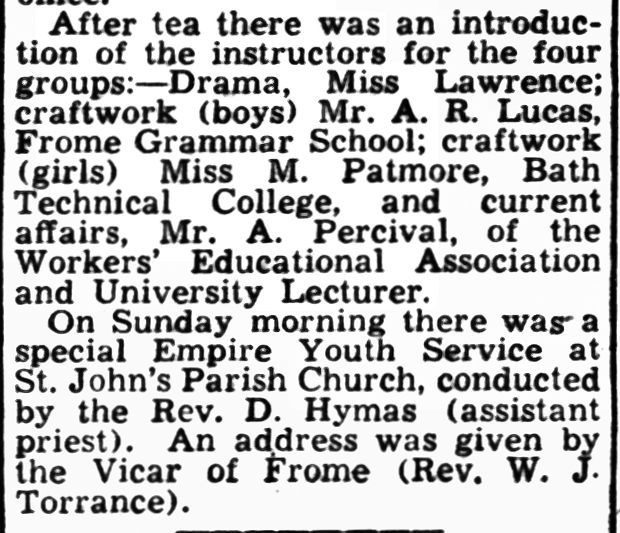
Somerset Guardian - 1946-05-24